
Thing · Farming
Plough
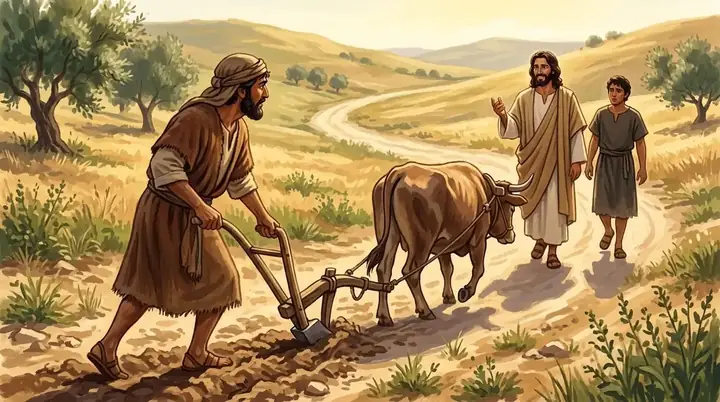
A simple wooden plough with an iron point, pulled by oxen, that scratched up the soil for sowing after the autumn rains. Elisha was ploughing when Elijah called him, and Jesus said no one who looks back from the plough is fit for the kingdom.
- Pulled by
- Oxen; the law forbade yoking an ox and a donkey together (Deuteronomy 22:10)
- Also spelled
- Plow
What it was
The plough of Bible lands was light: a wooden frame with a pole to the yoke, a handle for the ploughman, and a point or share of iron that broke up the ground. Israel had to take their shares to Philistine smiths to be sharpened, since the Philistines kept iron-working to themselves (1 Samuel 13:19–20).
How it was used
Ploughing began when the early rains softened the hard ground in autumn. Elisha was ploughing with twelve yoke of oxen when Elijah threw his cloak over him; he killed his oxen, boiled their flesh with the wooden gear, and followed (1 Kings 19:19–21). Job's oxen were ploughing when the Sabeans raided them (Job 1:14). Even in ploughing time the Sabbath was to be kept (Exodus 34:21).
What it meant
The psalmist says enemies ploughed his back, making long furrows (Psalms 129:3). Jesus warned, "No man, having put his hand to the plough, and looking back, is fit for the kingdom of God" (Luke 9:62): a ploughman who looks behind him drives a crooked furrow.
Key verses
- 1 Samuel 13:20
But all the Israelites went down to the Philistines, to sharpen every man his share, and his coulter, and his axe, and his mattock.
- 1 Kings 19:19
So he departed thence, and found Elisha the son of Shaphat, who was plowing with twelve yoke of oxen before him, and he with the twelfth: and Elijah passed by him, and cast his mantle upon him.
- Psalms 129:3
The plowers plowed upon my back: they made long their furrows.
- Luke 9:62
And Jesus said unto him, No man, having put his hand to the plough, and looking back, is fit for the kingdom of God.
Read next
Written for this app in its own words, from the Bible, with the facts checked against Bible dictionaries and encyclopedias: Easton's, Smith's, Fausset's, ISBE, Holman, the New Bible Dictionary, Vine's and the Thompson Chain topics.
