
Teaching
Philosophy
The search for wisdom by human reasoning. Job and Ecclesiastes wrestle with life's deepest questions; Paul debated philosophers in Athens but warned that worldly wisdom cannot find God without his revelation in Christ.
- In Athens
- Epicureans and Stoics met Paul (Acts 17:18)
- Warning
- "Beware lest any man spoil you through philosophy" (Colossians 2:8)
In the Old Testament
The Bible has its own thinkers. Ecclesiastes looks hard at work, pleasure, wealth and death "under the sun" and finds them empty without God, ending, "Fear God, and keep his commandments" (Ecclesiastes 12:13). Job and his friends argue about why the righteous suffer, and Job 28 asks where wisdom can be found, answering that the fear of the Lord is wisdom (Job 28:28). Creation itself shows God's power and divine nature to all (Romans 1:19–20).
In the New Testament
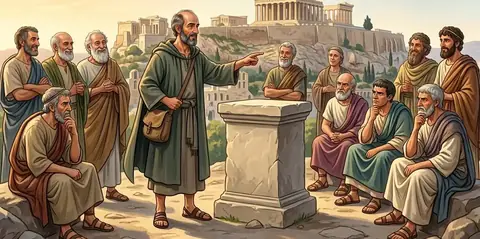
In Athens, Epicurean and Stoic philosophers called Paul a babbler, but let him speak at the Areopagus, where he quoted their own poets (Acts 17:18–28). Yet Paul did not rely on clever argument. The world by its wisdom did not know God, so God chose to save through the foolishness of preaching Christ crucified (1 Corinthians 1:21–23). He came to Corinth not with fine words but in the Spirit's power, so that their faith would rest on God (1 Corinthians 2:1–5).
For us
Paul warns against philosophy and empty deceit that follow human tradition rather than Christ, in whom are hidden all the treasures of wisdom and knowledge (Colossians 2:3,8). Honest thinking is good; it finds its end in him.
Key verses
- Ecclesiastes 12:13
Let us hear the conclusion of the whole matter: Fear God, and keep his commandments: for this is the whole duty of man.
- Job 28:28
And unto man he said, Behold, the fear of the Lord, that is wisdom; and to depart from evil is understanding.
- Acts 17:18
Then certain philosophers of the Epicureans, and of the Stoicks, encountered him. And some said, What will this babbler say? other some, He seemeth to be a setter forth of strange gods: because he preached unto them Jesus, and the resurrection.
- 1 Corinthians 1:21–24
For after that in the wisdom of God the world by wisdom knew not God, it pleased God by the foolishness of preaching to save them that believe. For the Jews require a sign, and the Greeks seek after wisdom: But we preach Christ crucified, unto the Jews a stumblingblock, and unto the Greeks foolishness; …
- Colossians 2:8
Beware lest any man spoil you through philosophy and vain deceit, after the tradition of men, after the rudiments of the world, and not after Christ.
Read next

Written for this app in its own words, from the Bible, with the facts checked against Bible dictionaries and encyclopedias: Easton's, Smith's, Fausset's, ISBE, Holman, the New Bible Dictionary, Vine's and the Thompson Chain topics.
