
Animal · Bird
Pelican
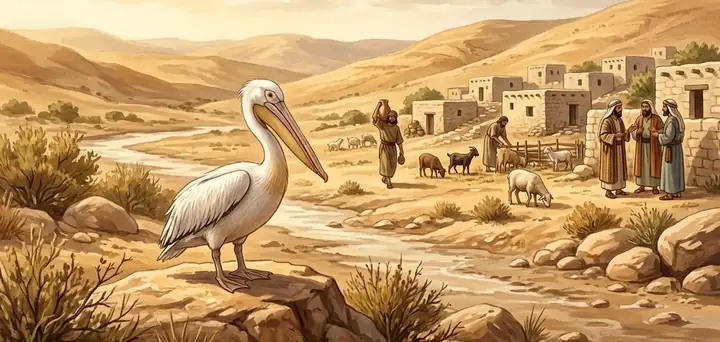
A huge water bird with a pouch under its bill, listed among the unclean birds of the Law. A lonely pelican in the wilderness is the psalmist's picture of desolation.
- Hebrew
- Qaath, from a word for vomiting, because it brings up fish from its pouch to feed its young
- Unclean
- Leviticus 11:18; Deuteronomy 14:17
- In the KJV
- Also behind the "cormorant" of Isaiah 34:11 and of Zephaniah 2:14
The pelican is one of the largest birds of the Bible lands, nearly six feet (1.8 m) from bill to tail, with wings that stretch more than twice as wide. Flocks of them still gather on the lakes of the Holy Land on their way between Africa and Europe. The bird scoops fish into the great pouch under its bill, then brings them up again for its young, and the Hebrew name seems to come from that habit.
The Law of Moses put it among the birds Israel was not to eat (Leviticus 11:18; Deuteronomy 14:17). Its other two appearances are grim. Where the KJV has "cormorant" in two verses of the prophets (Isaiah 34:11; Zephaniah 2:14), the Hebrew is the pelican, settling in cities that God has laid waste, Edom and Nineveh. And the sick and lonely writer of Psalm 102 says, "I am like a pelican of the wilderness" (Psalms 102:6): a water bird far from water, out of place and forlorn.
Key verses
- Leviticus 11:18
And the swan, and the pelican, and the gier eagle,
- Psalms 102:6
I am like a pelican of the wilderness: I am like an owl of the desert.
- Isaiah 34:11
But the cormorant and the bittern shall possess it; the owl also and the raven shall dwell in it: and he shall stretch out upon it the line of confusion, and the stones of emptiness.
Read next
Written for this app in its own words, from the Bible, with the facts checked against Bible dictionaries and encyclopedias: Easton's, Smith's, Fausset's, ISBE, Holman, the New Bible Dictionary, Vine's and the Thompson Chain topics.
