
Topic
Nolle Prosequi
Latin: "unwilling to pursue", dropping a charge
A court's refusal to go on with a case. At Corinth the Roman proconsul Gallio threw out the Jews' charge against Paul as a matter of their own law and words, and drove them from his judgment seat.
- Verse
- Acts 18:12–17
- Judge
- Gallio, proconsul of Achaia
When Gallio was proconsul of Achaia, the Jews of Corinth brought Paul before his judgment seat, saying, "This fellow persuadeth men to worship God contrary to the law." Before Paul could even speak, Gallio answered that if it were a matter of wrong or crime he would listen, "But if it be a question of words and names, and of your law, look ye to it; for I will be no judge of such matters." He drove them from the court (Acts 18:12–16). The crowd then beat Sosthenes, the ruler of the synagogue, "and Gallio cared for none of those things" (Acts 18:17).
The ruling meant that the Roman authorities would treat the Christian message as a matter within Judaism, not a crime. It fulfilled the Lord's promise to Paul in a vision at Corinth: "no man shall set on thee to hurt thee" (Acts 18:9–10).
Key verses
- Acts 18:12–17
And when Gallio was the deputy of Achaia, the Jews made insurrection with one accord against Paul, and brought him to the judgment seat, Saying, This fellow persuadeth men to worship God contrary to the law. And when Paul was now about to open his mouth, Gallio said unto the Jews, If it were a matter of wrong or wicked lewdness, O ye Jews, reason would that I should bear with you: …
- Acts 18:9–10
Then spake the Lord to Paul in the night by a vision, Be not afraid, but speak, and hold not thy peace: For I am with thee, and no man shall set on thee to hurt thee: for I have much people in this city.
Read next
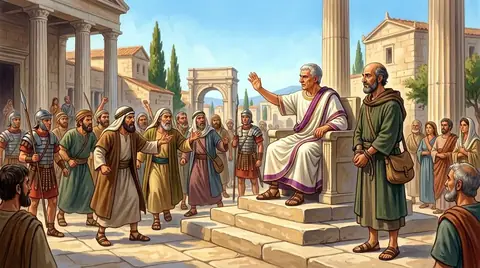 Person · Roman governorGallioThe Roman governor of Achaia when Paul was at Corinth. When the Jews brought Paul to court, Gallio refused to hear a…
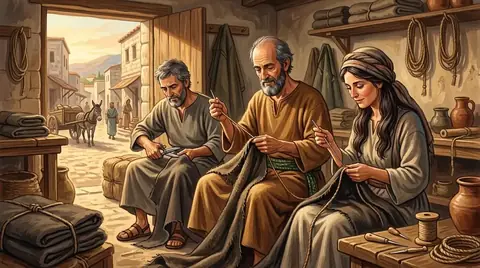 Place · CityCorinthA rich, busy port city on the narrow neck of land joining southern Greece to the mainland. Paul founded a church there…
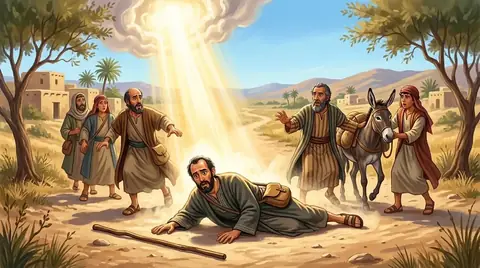 PersonPaulA Pharisee who hated the church until the risen Jesus met him on the road to Damascus. He became the apostle to the…
Written for this app in its own words, from the Bible, with the facts checked against Bible dictionaries and encyclopedias: Easton's, Smith's, Fausset's, ISBE, Holman, the New Bible Dictionary, Vine's and the Thompson Chain topics.
