
Feast
The New Moon
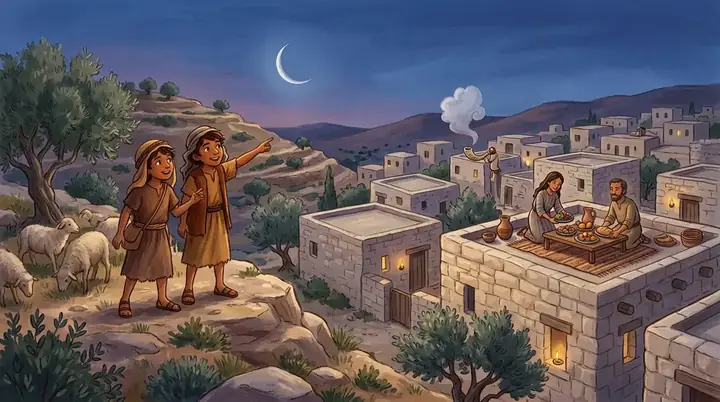
Each month in Israel began when the thin new crescent was first seen. Trumpets sounded, extra offerings were made, and families gathered to eat.
- When
- The first day of every month; Israel's months followed the moon
- What happened
- Trumpets, burnt offerings, a sin offering, a holiday from trade
- Where
- Numbers 10:10; Numbers 28:11–15; 1 Samuel 20:5; 2 Kings 4:23; Psalms 81:3; Amos 8:5; Colossians 2:16
What it was
Israel's calendar followed the moon. A month began when the first sliver of the new crescent was seen in the evening sky, about every twenty-nine or thirty days. The day was a small holy day. The priests blew the silver trumpets over the sacrifices (Numbers 10:10), and extra burnt offerings, a grain offering, drink offerings and a goat for a sin offering were brought (Numbers 28:11–15). The New Moon of the seventh month was a full feast day, the Feast of Trumpets (Leviticus 23:24).
In the Bible
King Saul held a feast at the New Moon and expected David at his table; David's empty seat two days running brought his anger into the open (1 Samuel 20:5–34). When the Shunammite woman set off to find Elisha, her husband asked why, since it was "neither new moon, nor sabbath", the days when people went to hear a prophet (2 Kings 4:23). Greedy traders grumbled, "When will the new moon be gone, that we may sell corn?" (Amos 8:5), so trading stopped that day. God told Israel through Isaiah that he hated their new moons and feasts while their hands were full of blood (Isaiah 1:13–15); the ceremonies were never the point.
What it meant
Paul says New Moons, feasts and sabbaths were "a shadow of things to come; but the body is of Christ" (Colossians 2:16–17). No one is to be judged about keeping them now. Isaiah looks past them to a day when all flesh comes to worship God "from one new moon to another" (Isaiah 66:23).
Key verses
- Numbers 28:11
And in the beginnings of your months ye shall offer a burnt offering unto the Lord; two young bullocks, and one ram, seven lambs of the first year without spot;
- 1 Samuel 20:5
And David said unto Jonathan, Behold, to morrow is the new moon, and I should not fail to sit with the king at meat: but let me go, that I may hide myself in the field unto the third day at even.
- Amos 8:5
Saying, When will the new moon be gone, that we may sell corn? and the sabbath, that we may set forth wheat, making the ephah small, and the shekel great, and falsifying the balances by deceit?
- Colossians 2:16–17
Let no man therefore judge you in meat, or in drink, or in respect of an holyday, or of the new moon, or of the sabbath days: Which are a shadow of things to come; but the body is of Christ.
Read next
 Person · KingSaulIsrael's first king, a tall Benjamite chosen when the people demanded a king like the nations. He began humbly and won…
 Person · KingDavidThe shepherd boy who killed Goliath and became Israel's greatest king, "a man after God's own heart". He wrote many…
 PersonElishaElijah's successor, a farmer's son who asked for a double share of his master's spirit and received it. His long…
Written for this app in its own words, from the Bible, with the facts checked against Bible dictionaries and encyclopedias: Easton's, Smith's, Fausset's, ISBE, Holman, the New Bible Dictionary, Vine's and the Thompson Chain topics.
