
Saying
Neck
The Bible uses the neck in many sayings. A "stiffnecked" people will not bend to God; a yoke on the neck means slavery; a foot on the neck means conquest; and to lay down one's neck is to risk one's life.
- Stiffnecked
- Exodus 32:9; Acts 7:51
- Yoke
- Deuteronomy 28:48; Jeremiah 27:2
- Risked their necks
- Priscilla and Aquila (Romans 16:4)
Sayings
An ox that would not bow its neck to the yoke was stubborn, so God called Israel "a stiffnecked people" when they made the golden calf (Exodus 32:9), and Stephen said the same of the council (Acts 7:51). A yoke of iron on the neck meant hard slavery to enemies (Deuteronomy 28:48). Jeremiah wore a wooden yoke on his neck to show that the nations must serve Babylon (Jeremiah 27:2), and Isaiah promised that God would break the oppressor's yoke from his people's neck (Isaiah 10:27). After the battle at Gibeon, Joshua had his captains set their feet upon the necks of five captured kings, a sign that they were beaten (Joshua 10:24), and David sang that God had given him "the necks of mine enemies" (2 Samuel 22:41).
Other uses
Falling on someone's neck was a warm embrace, as when Joseph met Benjamin and his father, or the father ran to his returning son (Genesis 45:14; Genesis 46:29; Luke 15:20). Paul thanks Priscilla and Aquila, "who have for my life laid down their own necks" (Romans 16:4).
Key verses
- Exodus 32:9
And the Lord said unto Moses, I have seen this people, and, behold, it is a stiffnecked people:
- Deuteronomy 28:48
Therefore shalt thou serve thine enemies which the Lord shall send against thee, in hunger, and in thirst, and in nakedness, and in want of all things: and he shall put a yoke of iron upon thy neck, until he have destroyed thee.
- Isaiah 10:27
And it shall come to pass in that day, that his burden shall be taken away from off thy shoulder, and his yoke from off thy neck, and the yoke shall be destroyed because of the anointing.
- Luke 15:20
And he arose, and came to his father. But when he was yet a great way off, his father saw him, and had compassion, and ran, and fell on his neck, and kissed him.
- Romans 16:4
Who have for my life laid down their own necks: unto whom not only I give thanks, but also all the churches of the Gentiles.
Read next
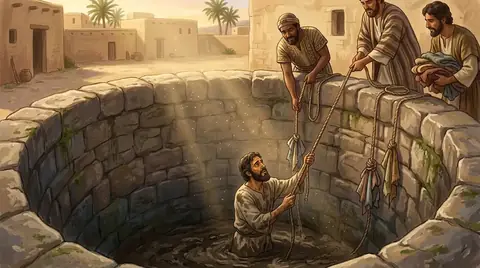 PersonJeremiahThe prophet who warned Judah for forty years that Babylon was coming, and wept as it came. He was beaten, put in the…
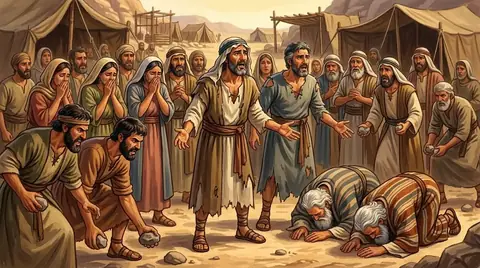 PersonJoshuaMoses' helper who took over from him and led Israel across the Jordan into the Promised Land. He fought the wars of…
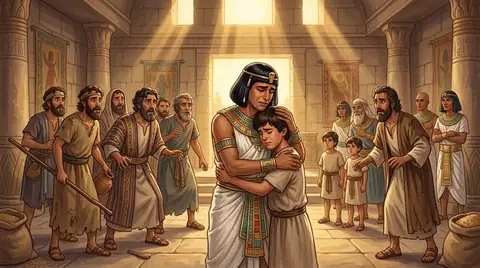 PersonJosephJacob's favourite son, sold by his brothers into Egypt, where he rose from prison to rule the land and saved his family…
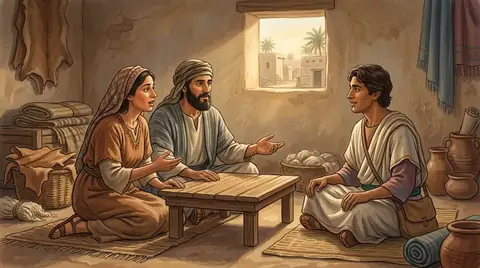 PersonPriscillaA Jewish Christian woman who, with her husband Aquila, made tents alongside Paul, taught Apollos the way of God more…
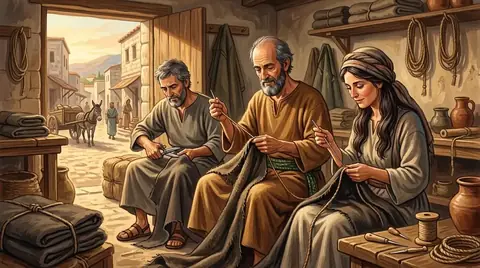 PersonAquilaA Jewish tentmaker from Pontus who, with his wife Priscilla, worked beside Paul at Corinth, taught Apollos at Ephesus…
Written for this app in its own words, from the Bible, with the facts checked against Bible dictionaries and encyclopedias: Easton's, Smith's, Fausset's, ISBE, Holman, the New Bible Dictionary, Vine's and the Thompson Chain topics.
