
Place · City
Myra
MY-raNew Testament · Paul's voyage to Rome, AD 59 · today Demre, Turkey
A port city of Lycia, on the south coast of Asia Minor, where Paul and the other prisoners changed to a grain ship from Alexandria bound for Italy.
- Where
- In Lycia, on the south coast of today's Turkey
- Known for
- Where Paul boarded the ship later wrecked on Malta
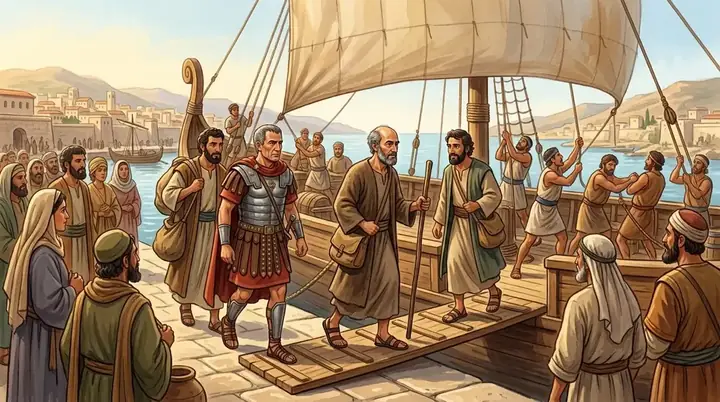
On his voyage to Rome as a prisoner, Paul sailed first in a ship from Adramyttium along the coast of Asia Minor. "When we had sailed over the sea of Cilicia and Pamphylia, we came to Myra, a city of Lycia" (Acts 27:5).
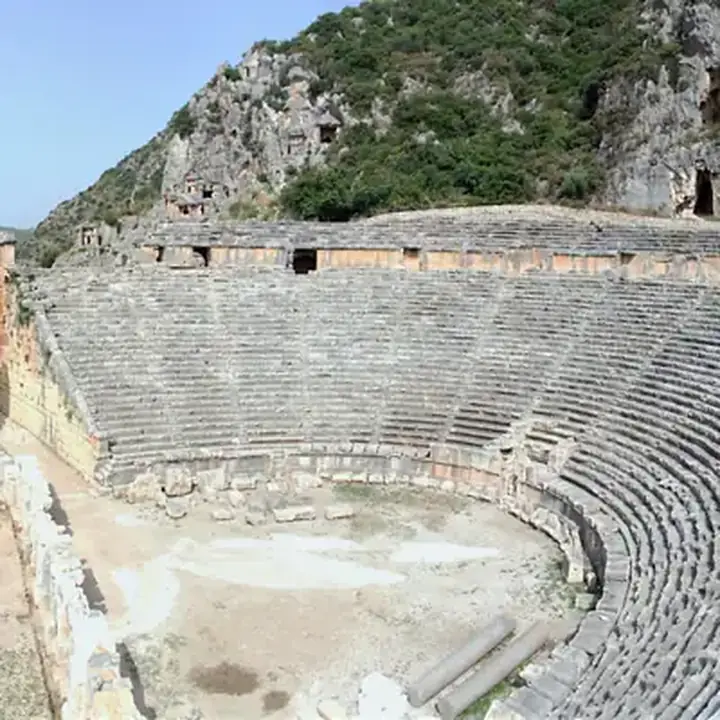
Myra was a busy harbour on the route of the great grain ships that carried wheat from Egypt to Rome. There the centurion Julius found a ship of Alexandria sailing for Italy and put his prisoners on board (Acts 27:6). It was this ship that the storm later drove across the sea and broke to pieces on the coast of Malta, though every life was saved (Acts 27:41–44). The ruins of Myra stand near the town of Demre in Turkey.
Key verses
- Acts 27:5–6
And when we had sailed over the sea of Cilicia and Pamphylia, we came to Myra, a city of Lycia. And there the centurion found a ship of Alexandria sailing into Italy; and he put us therein.
- Acts 27:41–44
And falling into a place where two seas met, they ran the ship aground; and the forepart stuck fast, and remained unmoveable, but the hinder part was broken with the violence of the waves. And the soldiers’ counsel was to kill the prisoners, lest any of them should swim out, and escape. But the centurion, willing to save Paul, kept them from their purpose; and commanded that they which could swim should cast themselves first into the sea, and get to land: …
On the map
Mentioned in 1 verse
- Acts 1
Read next
 Place · RegionLyciaA mountainous coastal region in the south-west corner of Asia Minor, facing the island of Rhodes. Paul changed ships at…
 Place · IslandMaltaThe island south of Sicily where Paul's ship was wrecked on his way to Rome. Everyone on board reached shore safely…
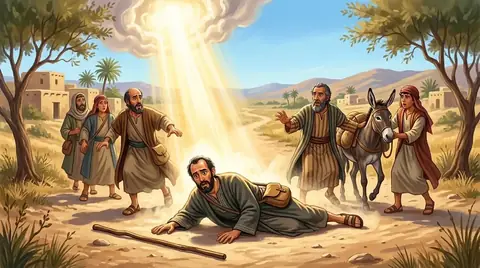 PersonPaulA Pharisee who hated the church until the risen Jesus met him on the road to Damascus. He became the apostle to the…Place · CityAdramyttiumA seaport on the north-west coast of Asia (Turkey). Paul began his voyage to Rome as a prisoner on a ship from…PersonJuliusThe Roman centurion who took Paul as a prisoner from Caesarea to Rome. He treated Paul kindly, and in the shipwreck he…
Written for this app in its own words, from the Bible, with the facts checked against Bible dictionaries and encyclopedias: Easton's, Smith's, Fausset's, ISBE, Holman, the New Bible Dictionary, Vine's and the Thompson Chain topics. People and places: STEPBible.org (TIPNR), CC BY 4.0; where a place is today and its photo: OpenBible.info, CC BY 4.0.
