
Teaching
Modesty
A humble, unshowy spirit in dress and behaviour. Paul asks Christian women to dress modestly and adorn themselves with good works, and the Bible shows modesty in Saul's early humility, Vashti's refusal and young Elihu's waiting.
- Paul said
- "In modest apparel, with shamefacedness and sobriety" (1 Timothy 2:9)
In the Bible
When Samuel told young Saul that Israel's hopes rested on him, Saul answered, "Am not I a Benjamite, of the smallest of the tribes... and my family the least?" (1 Samuel 9:21). Queen Vashti refused to come and show off her beauty before the king's drunken guests, and lost her crown for it (Esther 1:10–12). Elihu waited till the older men had finished speaking, because he was young (Job 32:4–7).
For us
Paul asks that women "adorn themselves in modest apparel, with shamefacedness and sobriety; not with broided hair, or gold, or pearls, or costly array; but (which becometh women professing godliness) with good works" (1 Timothy 2:9–10). Peter says the same, pointing to "the ornament of a meek and quiet spirit, which is in the sight of God of great price" (1 Peter 3:3–4). Modesty is humility made visible, for men and women alike: not thinking of oneself more highly than one ought (Romans 12:3).
Key verses
- 1 Timothy 2:9–10
In like manner also, that women adorn themselves in modest apparel, with shamefacedness and sobriety; not with broided hair, or gold, or pearls, or costly array; But (which becometh women professing godliness) with good works.
- 1 Peter 3:3–4
Whose adorning let it not be that outward adorning of plaiting the hair, and of wearing of gold, or of putting on of apparel; But let it be the hidden man of the heart, in that which is not corruptible, even the ornament of a meek and quiet spirit, which is in the sight of God of great price.
- 1 Samuel 9:21
And Saul answered and said, Am not I a Benjamite, of the smallest of the tribes of Israel? and my family the least of all the families of the tribe of Benjamin? wherefore then speakest thou so to me?
- Romans 12:3
For I say, through the grace given unto me, to every man that is among you, not to think of himself more highly than he ought to think; but to think soberly, according as God hath dealt to every man the measure of faith.
Read next
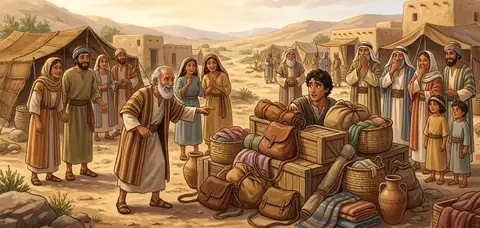 Person · KingSaulIsrael's first king, a tall Benjamite chosen when the people demanded a king like the nations. He began humbly and won…
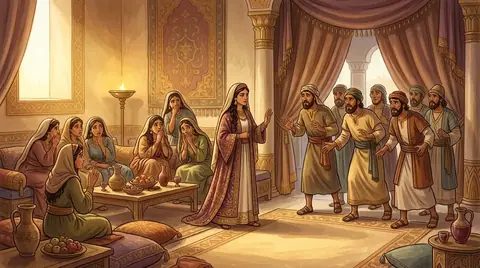 PersonVashtiThe queen of the Persian king Ahasuerus (Xerxes). When she refused to come and show her beauty to his drunken guests…PersonElihuThe young man who waited until Job and his three friends had run out of words, then spoke at length about God's…
Written for this app in its own words, from the Bible, with the facts checked against Bible dictionaries and encyclopedias: Easton's, Smith's, Fausset's, ISBE, Holman, the New Bible Dictionary, Vine's and the Thompson Chain topics.
