
Thing · Money
Mite
The smallest copper coin in use in Jesus' day, the Greek lepton. A poor widow dropped two of them into the temple chest, and Jesus said she had given more than all the rich.
- Value
- Two mites made one farthing (quadrans); about a sixty-fourth of a day's wage
- Greek
- lepton, "a thin one"
- Where
- Mark 12:42; Luke 12:59; Luke 21:2
What it was
The mite was the least coin anyone handled, a tiny, thin piece of bronze. Two of them made a Roman quadrans, the "farthing" of the KJV, and 128 of them made a denarius, a labourer's pay for a day (Mark 12:42). Jesus said that a man who fails to settle with his accuser will not get out of prison "till thou hast paid the very last mite" (Luke 12:59): every last penny.
The widow's mites
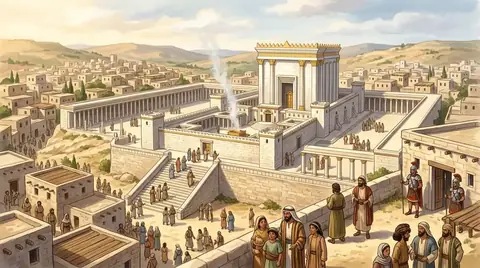
Sitting across from the treasury in the temple, Jesus watched the rich put in large gifts. Then a poor widow dropped in two mites. He called his disciples and told them she had given more than all the others, "for all they did cast in of their abundance; but she of her want did cast in all that she had, even all her living" (Mark 12:41–44; Luke 21:1–4). God measures a gift not by its size but by what it costs the giver and the love behind it. See also Mite and farthing.
Key verses
- Mark 12:41–44
And Jesus sat over against the treasury, and beheld how the people cast money into the treasury: and many that were rich cast in much. And there came a certain poor widow, and she threw in two mites, which make a farthing. And he called unto him his disciples, and saith unto them, Verily I say unto you, That this poor widow hath cast more in, than all they which have cast into the treasury: …
- Luke 21:1–4
And he looked up, and saw the rich men casting their gifts into the treasury. And he saw also a certain poor widow casting in thither two mites. And he said, Of a truth I say unto you, that this poor widow hath cast in more than they all: …
- Luke 12:59
I tell thee, thou shalt not depart thence, till thou hast paid the very last mite.
Read next
Written for this app in its own words, from the Bible, with the facts checked against Bible dictionaries and encyclopedias: Easton's, Smith's, Fausset's, ISBE, Holman, the New Bible Dictionary, Vine's and the Thompson Chain topics.
