
Topic
Misjudgment
Jumping to the wrong conclusion about others. Eli took Hannah's silent prayer for drunkenness, and Israel nearly went to war with the eastern tribes over an altar that was only a memorial.
- Examples
- Eli and Hannah (1 Samuel 1:13–17); the altar by the Jordan (Joshua 22:10–34)
When Hannah prayed in the tabernacle, only her lips moved, and Eli the priest thought she was drunk. "No, my lord," she said, "I am a woman of a sorrowful spirit... and have poured out my soul before the LORD." Eli blessed her instead (1 Samuel 1:13–17).
When the tribes of Reuben, Gad and half Manasseh went home across the Jordan, they built a great altar by the river. The rest of Israel took it for rebellion against God and gathered for war. But first they sent Phinehas to ask. The eastern tribes explained that it was only a witness, so that their children would never be told they had no part in the LORD. Phinehas was satisfied, and war was avoided (Joshua 22:10–34). Moses himself had at first misjudged these tribes' request for land (Numbers 32:1–33).
Jesus warned, "Judge not according to the appearance, but judge righteous judgment" (John 7:24).
Key verses
- 1 Samuel 1:13–17
Now Hannah, she spake in her heart; only her lips moved, but her voice was not heard: therefore Eli thought she had been drunken. And Eli said unto her, How long wilt thou be drunken? put away thy wine from thee. And Hannah answered and said, No, my lord, I am a woman of a sorrowful spirit: I have drunk neither wine nor strong drink, but have poured out my soul before the Lord. …
- Joshua 22:10–34
And when they came unto the borders of Jordan, that are in the land of Canaan, the children of Reuben and the children of Gad and the half tribe of Manasseh built there an altar by Jordan, a great altar to see to. And the children of Israel heard say, Behold, the children of Reuben and the children of Gad and the half tribe of Manasseh have built an altar over against the land of Canaan, in the borders of Jordan, at the passage of the children of Israel. And when the children of Israel heard of it, the whole congregation of the children of Israel gathered themselves together at Shiloh, to go up to war against them. …
- John 7:24
Judge not according to the appearance, but judge righteous judgment.
Read next
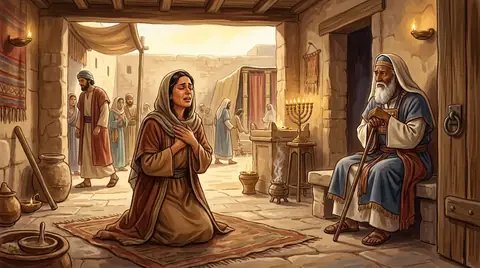 PersonHannahThe childless wife of Elkanah who prayed for a son at Shiloh, promised him to God, and became the mother of the prophet…
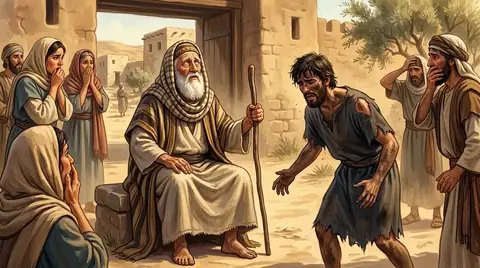 PersonEliThe old high priest at Shiloh who raised the boy Samuel. A kind man, he failed to restrain his wicked sons, and died…
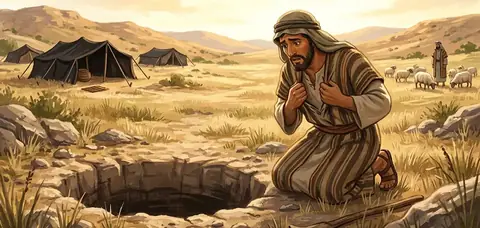 Person · TribeReubenJacob's firstborn, who lost the rights of the eldest by sleeping with his father's concubine. He tried to save Joseph…
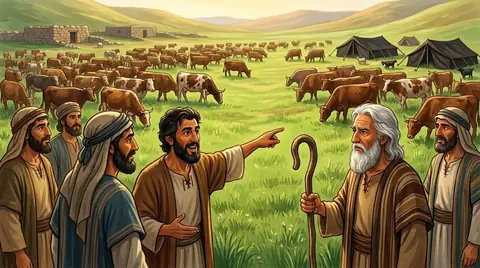 Person · TribeGadJacob's seventh son, by Leah's maid Zilpah, and the warlike tribe named after him that settled east of the Jordan. A…
 Person · TribeManassehJoseph's elder son, adopted by Jacob as a tribe of Israel, whose land straddled the Jordan. Also the longest-reigning…PersonPhinehasThe grandson of Aaron whose zeal for God stopped a plague at Shittim. God rewarded him with an everlasting priesthood.…
Written for this app in its own words, from the Bible, with the facts checked against Bible dictionaries and encyclopedias: Easton's, Smith's, Fausset's, ISBE, Holman, the New Bible Dictionary, Vine's and the Thompson Chain topics.
