
Idol · Greek god
Mercurius
mer-KEW-ree-usHermes to the Greeks, Mercury to the Romans
The Greek god of speech, travel and trade, messenger of Jupiter. The people of Lystra took Paul for him because he did the talking when he and Barnabas healed a lame man.
- Found in
- Acts 14:12 only
- Where
- Lystra, in Lycaonia
In the Bible
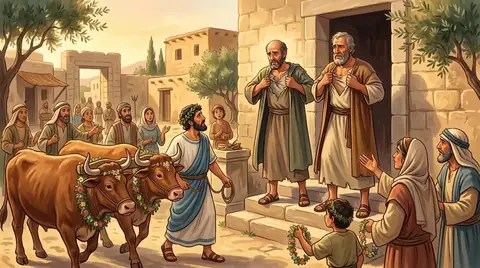
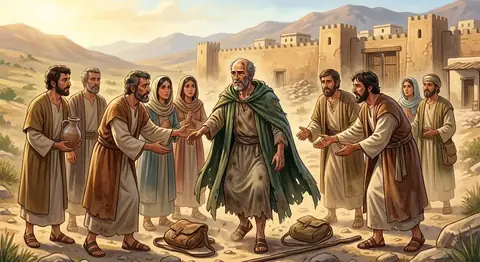
At Lystra, Paul healed a man lame from birth. The crowd cried out in their own language that the gods had come down in human form. They called Barnabas Jupiter, the chief god, and Paul Mercurius, "because he was the chief speaker" (Acts 14:11–12). The priest of Jupiter brought oxen and garlands to the gates to sacrifice to them.
The two apostles tore their clothes in horror and ran into the crowd, insisting they were only men, and preaching the living God who made heaven and earth and gives rain and harvests (Acts 14:14–18). Even so they could barely stop the sacrifice. Soon afterwards the same crowd, stirred up by Jews from Antioch and Iconium, stoned Paul and left him for dead (Acts 14:19).
What it means
A local legend told how Jupiter and Mercury had once visited that region in disguise and been turned away by everyone but one old couple; the people of Lystra were not going to make that mistake again. The story shows how ready pagans were to worship a man, and how firmly the apostles refused the honour. God alone is to be worshipped; his servants point away from themselves.
Key verses
- Acts 14:11–12
And when the people saw what Paul had done, they lifted up their voices, saying in the speech of Lycaonia, The gods are come down to us in the likeness of men. And they called Barnabas, Jupiter; and Paul, Mercurius, because he was the chief speaker.
- Acts 14:15
And saying, Sirs, why do ye these things? We also are men of like passions with you, and preach unto you that ye should turn from these vanities unto the living God, which made heaven, and earth, and the sea, and all things that are therein:
On the map
Read next
 PlaceLystraA town in what is now central Turkey where Paul healed a lame man, was hailed as a god, then stoned and left for dead.…PlaceLycaoniaA region in the middle of Asia Minor, home to the towns of Lystra and Derbe. Paul and Barnabas preached there, and the…
 PersonPaulA Pharisee who hated the church until the risen Jesus met him on the road to Damascus. He became the apostle to the…
 PersonBarnabasA generous Levite from Cyprus who befriended the new convert Paul when others feared him, and travelled with him on the…
 Place · CityAntiochTwo New Testament cities. Antioch in Syria was the great city where believers were first called Christians and from…
 PlaceIconiumA city on the high plain of central Asia Minor where Paul and Barnabas preached on the first missionary journey, won…
Written for this app in its own words, from the Bible, with the facts checked against Bible dictionaries and encyclopedias: Easton's, Smith's, Fausset's, ISBE, Holman, the New Bible Dictionary, Vine's and the Thompson Chain topics.
