
Plant
Mandrakes
Hebrew dudaim, "love plants" · Gen 30:14-16; Song 7:13
A low plant with a forked root and sweet-smelling yellow fruit, believed to help a woman have children. Rachel bargained with Leah for Reuben's mandrakes, yet her son came from God alone.
- Where
- Genesis 30:14–16; Song of Songs 7:13
- Hebrew
- Dudaim, from the word for love
What it was
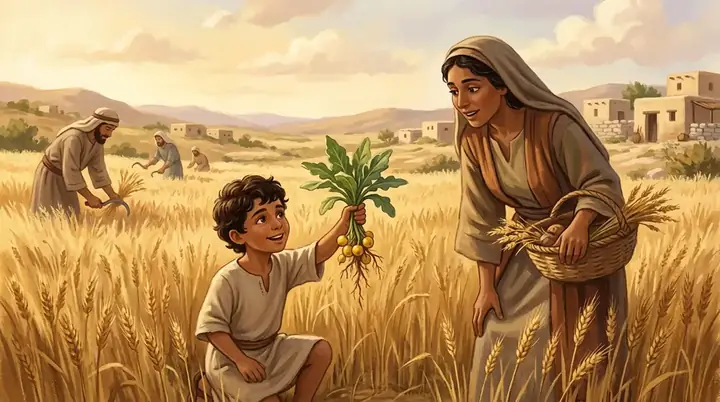
The mandrake grows in fields and waste places all over the land of Israel. It has a rosette of large dark leaves, purple flowers in spring, and in May small yellow fruits, about the size of a plum, with a strong sweet smell. Its thick root often forks like a pair of legs, which gave rise to many superstitions. The Hebrew name means "love plants": people believed that eating the fruit stirred desire and helped a barren woman conceive, and it was used as a drug as well.
Rachel and Leah
In the wheat harvest Reuben, Leah's little boy, found mandrakes in the field and brought them to his mother. Rachel, who was still childless, asked for some, and Leah snapped that she had already taken her husband. So they struck a bargain: Rachel got the mandrakes and Leah got Jacob for the night. Leah had another son; and later "God remembered Rachel" and gave her Joseph (Genesis 30:14–24). The story quietly makes its point: the fruit did nothing, and God did everything.
In the Song of Solomon the bride says the mandrakes are giving their scent and she has stored up every pleasant fruit for her beloved (Song of Songs 7:13).
Key verses
- Genesis 30:14–16
And Reuben went in the days of wheat harvest, and found mandrakes in the field, and brought them unto his mother Leah. Then Rachel said to Leah, Give me, I pray thee, of thy son’s mandrakes. And she said unto her, Is it a small matter that thou hast taken my husband? and wouldest thou take away my son’s mandrakes also? And Rachel said, Therefore he shall lie with thee to night for thy son’s mandrakes. And Jacob came out of the field in the evening, and Leah went out to meet him, and said, Thou must come in unto me; for surely I have hired thee with my son’s mandrakes. And he lay with her that night.
- Genesis 30:22
And God remembered Rachel, and God hearkened to her, and opened her womb.
- Song of Songs 7:13
The mandrakes give a smell, and at our gates are all manner of pleasant fruits, new and old, which I have laid up for thee, O my beloved.
Read next
 Person · TribeReubenJacob's firstborn, who lost the rights of the eldest by sleeping with his father's concubine. He tried to save Joseph…
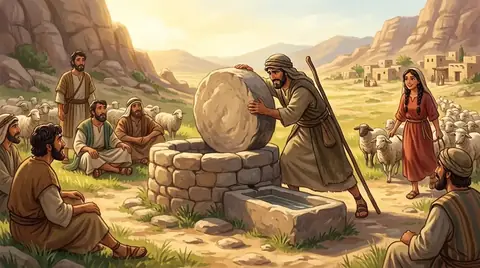 PersonRachelJacob's beloved wife, for whom he worked fourteen years. Long childless, she became the mother of Joseph and died…
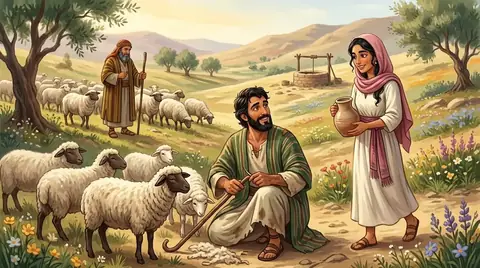 PersonLeahJacob's first wife, given to him by her father's trick in place of her sister Rachel. Less loved, she bore six of…
 PersonJacobIsaac's younger twin son, who won his brother's birthright and blessing by cunning, was changed by God, and was renamed…
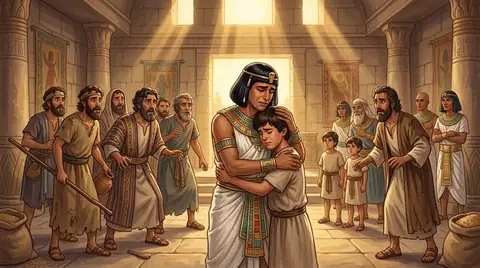 PersonJosephJacob's favourite son, sold by his brothers into Egypt, where he rose from prison to rule the land and saved his family…
Written for this app in its own words, from the Bible, with the facts checked against Bible dictionaries and encyclopedias: Easton's, Smith's, Fausset's, ISBE, Holman, the New Bible Dictionary, Vine's and the Thompson Chain topics.
