
Custom · Feast
Lord's day
The first day of the week, Sunday, when Christians remember Christ's rising from the dead. John was "in the Spirit on the Lord's day" when he saw the visions of Revelation.
- Verse
- Revelation 1:10
- Why that day
- Jesus rose on the first day of the week (Mark 16:2; Mark 16:9)
What it is
The name comes only once in the Bible: "I was in the Spirit on the Lord's day", says John on Patmos (Revelation 1:10). From early times Christians used it for the first day of the week. That was the day Jesus rose (Mark 16:9) and the day he came to his gathered disciples, twice (John 20:19; John 20:26). Pentecost fell on it too.
How it was kept
At Troas the believers came together "upon the first day of the week" to break bread, and Paul preached till midnight (Acts 20:7). He told the churches to set aside their gifts for the poor on that day (1 Corinthians 16:2). The Sabbath of rest was the seventh day, given at creation and in the law; the Lord's day celebrated the new creation begun at the empty tomb. Hebrews tells believers not to give up meeting together (Hebrews 10:25).
Key verses
- Revelation 1:10
I was in the Spirit on the Lord’s day, and heard behind me a great voice, as of a trumpet,
- Mark 16:9
Now when Jesus was risen early the first day of the week, he appeared first to Mary Magdalene, out of whom he had cast seven devils.
- John 20:19
Then the same day at evening, being the first day of the week, when the doors were shut where the disciples were assembled for fear of the Jews, came Jesus and stood in the midst, and saith unto them, Peace be unto you.
- Acts 20:7
And upon the first day of the week, when the disciples came together to break bread, Paul preached unto them, ready to depart on the morrow; and continued his speech until midnight.
- 1 Corinthians 16:2
Upon the first day of the week let every one of you lay by him in store, as God hath prospered him, that there be no gatherings when I come.
Read next
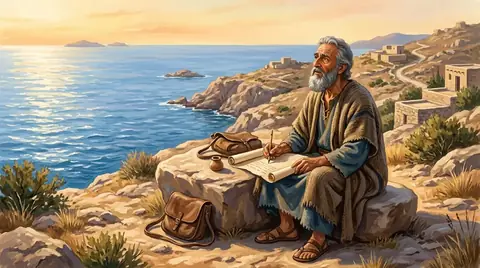 Place · IslandPatmosA small, rocky island in the Aegean Sea where the apostle John was sent "for the word of God", and where he saw the…
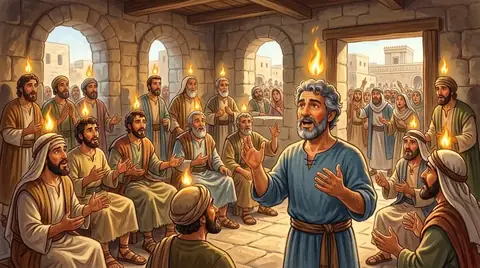 FeastPentecost (the Feast of Weeks)The harvest feast kept fifty days after Passover, when two loaves baked from the new wheat were offered to God. On the…
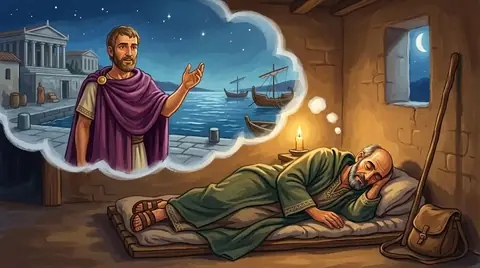 PlaceTroasA busy seaport on the north-west coast of Asia Minor. There Paul saw the vision of the man of Macedonia, and later…
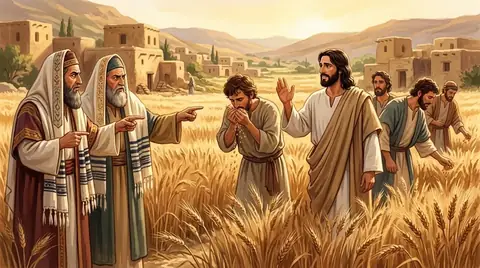 Custom · Day of restThe SabbathThe seventh day of the week, kept holy for rest and worship because God rested after creation. It was the sign of God's…
Written for this app in its own words, from the Bible, with the facts checked against Bible dictionaries and encyclopedias: Easton's, Smith's, Fausset's, ISBE, Holman, the New Bible Dictionary, Vine's and the Thompson Chain topics.
