
Custom · Law
Landmark
A stone or post that marked where one family's field ended and the next began. Moving a neighbour's landmark was theft of land, and God's law cursed anyone who did it.
- Law
- Deuteronomy 19:14; Deuteronomy 27:17
- Wisdom
- Proverbs 22:28; Proverbs 23:10
What it was
Fields in Israel had no fences. A boundary was shown by stones set along it, or by a heap of stones at the corners. Because each family's land was its inheritance from God, handed down from the days of Joshua, these markers mattered far more than they would to us. Shift a stone a few feet at night and you had quietly stolen part of a neighbour's living.
What the law said
God's law forbade moving a landmark that "they of old time have set" (Deuteronomy 19:14), and the curses read out from Mount Ebal included one on the man who did it (Deuteronomy 27:17). Proverbs repeats the warning and adds that the fields of the fatherless have a strong Redeemer who will take up their cause (Proverbs 23:10–11). Job lists landmark-moving among the sins of the powerful (Job 24:2), and Hosea says the princes of Judah had become like men who move boundaries (Hosea 5:10). The lesson is that God defends the rights of the weak against quiet, respectable cheating.
Key verses
- Deuteronomy 19:14
Thou shalt not remove thy neighbour’s landmark, which they of old time have set in thine inheritance, which thou shalt inherit in the land that the Lord thy God giveth thee to possess it.
- Deuteronomy 27:17
Cursed be he that removeth his neighbour’s landmark. And all the people shall say, Amen.
- Proverbs 22:28
Remove not the ancient landmark, which thy fathers have set.
- Proverbs 23:10–11
Remove not the old landmark; and enter not into the fields of the fatherless: For their redeemer is mighty; he shall plead their cause with thee.
Read next
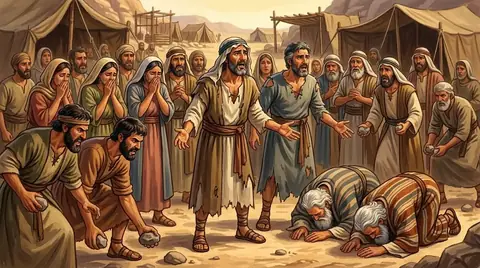 PersonJoshuaMoses' helper who took over from him and led Israel across the Jordan into the Promised Land. He fought the wars of…
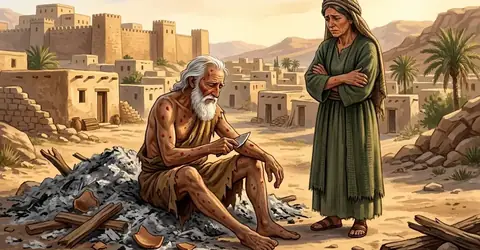 PersonJobA rich and godly man who lost his children, his wealth and his health in a single stroke, and would not curse God. His…
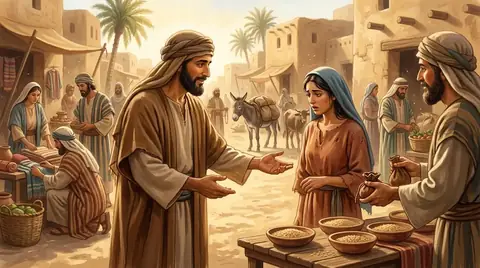 Person · ProphetHoseaThe prophet God sent to Israel, the northern kingdom, in its last years. God told him to marry Gomer, who was…
Written for this app in its own words, from the Bible, with the facts checked against Bible dictionaries and encyclopedias: Easton's, Smith's, Fausset's, ISBE, Holman, the New Bible Dictionary, Vine's and the Thompson Chain topics.
