
Place · Camp
Kibroth-hattaavah
KIB-roth hat-TAY-a-vah"Graves of craving" · a camp in the wilderness of Sinai · site uncertain
The camp a few days out from Sinai where Israel wailed for meat, God sent quails, and a plague struck the greedy. The name means "the graves of craving".
- Where
- Three days' journey north-east of Mount Sinai (Numbers 10:33; Numbers 11:34); the exact site isn't certain
- Known for
- The quails and the plague (Numbers 11:31–34)
- Today
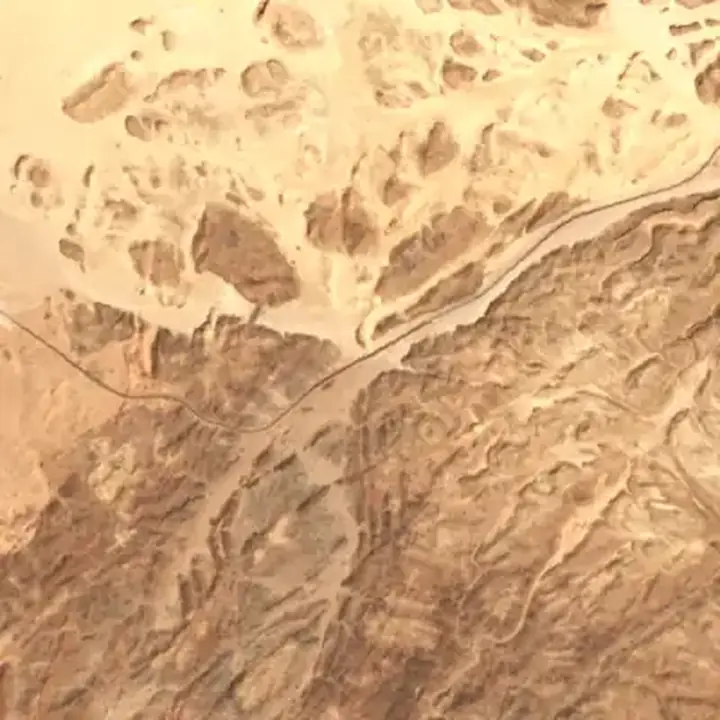
- probably Erweis el Ebeirig, in Egypt, about 90 km north-east of El Tur.
What happened
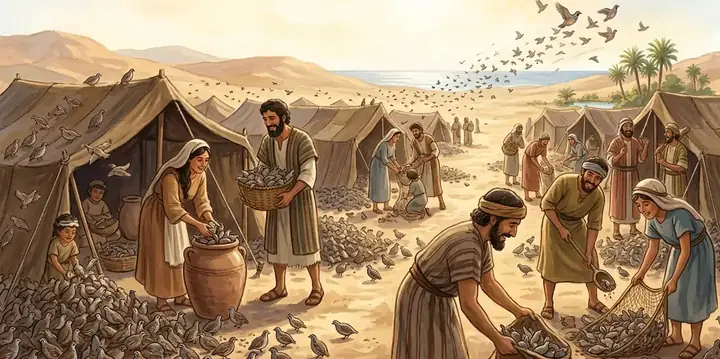
Israel had eaten manna for a year. Three days out from Sinai the rabble among them began to crave other food, and soon the whole camp was weeping at their tent doors for the fish, cucumbers, melons, leeks, onions and garlic of Egypt (Numbers 11:4–6). Moses was at the end of his strength, and God gave him seventy elders to share the load. Then God said the people would have meat, not for a day or two but for a whole month, until it came out of their nostrils (Numbers 11:18–20).
A wind drove quails in from the sea and dropped them around the camp, a day's walk in every direction, piled three feet deep. The people gathered them all that day and night and the next day, the least of them ten homers. But before they had even finished chewing the meat, the LORD's anger struck them with a great plague (Numbers 11:31–33). They buried the dead there and named the place Kibroth-hattaavah, "because there they buried the people that lusted" (Numbers 11:34). From there they moved on to Hazeroth (Numbers 33:16–17).
What it means
Moses later listed the place among the times Israel provoked the LORD (Deuteronomy 9:22), and Psalm 78 retells it: God gave them what they demanded, and the gift became their judgment (Psalms 78:26–31). Paul warns the church not to crave evil things "as they also lusted" (1 Corinthians 10:6).
Key verses
- Numbers 11:4–6
And the mixt multitude that was among them fell a lusting: and the children of Israel also wept again, and said, Who shall give us flesh to eat? We remember the fish, which we did eat in Egypt freely; the cucumbers, and the melons, and the leeks, and the onions, and the garlick: But now our soul is dried away: there is nothing at all, beside this manna, before our eyes.
- Numbers 11:31–34
And there went forth a wind from the Lord, and brought quails from the sea, and let them fall by the camp, as it were a day’s journey on this side, and as it were a day’s journey on the other side, round about the camp, and as it were two cubits high upon the face of the earth. And the people stood up all that day, and all that night, and all the next day, and they gathered the quails: he that gathered least gathered ten homers: and they spread them all abroad for themselves round about the camp. And while the flesh was yet between their teeth, ere it was chewed, the wrath of the Lord was kindled against the people, and the Lord smote the people with a very great plague. …
- Deuteronomy 9:22
And at Taberah, and at Massah, and at Kibroth–hattaavah, ye provoked the Lord to wrath.
- Psalms 78:29–31
So they did eat, and were well filled: for he gave them their own desire; They were not estranged from their lust. But while their meat was yet in their mouths, The wrath of God came upon them, and slew the fattest of them, and smote down the chosen men of Israel.
On the map
Mentioned in 5 verses
- Numbers 4
- Deuteronomy 1
Read next
Written for this app in its own words, from the Bible, with the facts checked against Bible dictionaries and encyclopedias: Easton's, Smith's, Fausset's, ISBE, Holman, the New Bible Dictionary, Vine's and the Thompson Chain topics. People and places: STEPBible.org (TIPNR), CC BY 4.0; where a place is today and its photo: OpenBible.info, CC BY 4.0.
