
Place · Landscape
Island
Hebrew 'i, dry land as against water; often "coastland" · the KJV's isles
In the Old Testament the word for "isle" means not only an island but any coastland, especially the far-off shores of the Mediterranean. The prophets often use the isles to stand for the distant nations.
- Hebrew
- 'I, land by the water: an island or a coast
- Also
- "The isles of the Gentiles" (Genesis 10:5); "the islands of the sea" (Isaiah 11:11)
What the word means
The Hebrew word behind "island" and "isle" means dry land by the water. Sometimes it is a true island, but more often it is a coast, such as the shore of Philistia or Tyre (Isaiah 20:6; Isaiah 23:2; Jeremiah 47:4). For Israel, who were not sailors, the isles were the lands across and around the Mediterranean, at the edge of the known world. After the Flood the families of Japheth spread out to "the isles of the Gentiles" (Genesis 10:5).
The isles and God's promise
The prophets use the word for the faraway nations. Isaiah says God will gather his people from "the islands of the sea" (Isaiah 11:11), and of God's servant, "the isles shall wait for his law" (Isaiah 42:4). "Listen, O isles, unto me," the servant calls (Isaiah 49:1). The gospel would reach the ends of the earth. In the New Testament real islands appear, such as Cyprus, Crete, Melita and Patmos.
Key verses
- Genesis 10:5
By these were the isles of the Gentiles divided in their lands; every one after his tongue, after their families, in their nations.
- Isaiah 11:11
And it shall come to pass in that day, that the Lord shall set his hand again the second time to recover the remnant of his people, which shall be left, from Assyria, and from Egypt, and from Pathros, and from Cush, and from Elam, and from Shinar, and from Hamath, and from the islands of the sea.
- Isaiah 42:4
He shall not fail nor be discouraged, till he have set judgment in the earth: and the isles shall wait for his law.
- Isaiah 49:1
Listen, O isles, unto me; and hearken, ye people, from far; The Lord hath called me from the womb; from the bowels of my mother hath he made mention of my name.
Read next
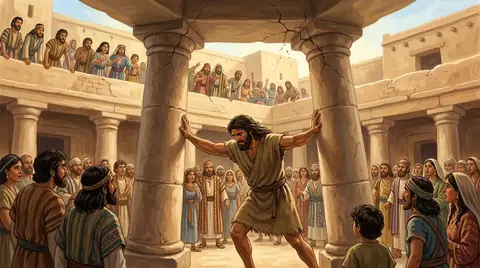 Place · RegionPhilistiaThe flat, fertile coastal plain south-west of Israel where the Philistines lived, with their five cities of Gaza…
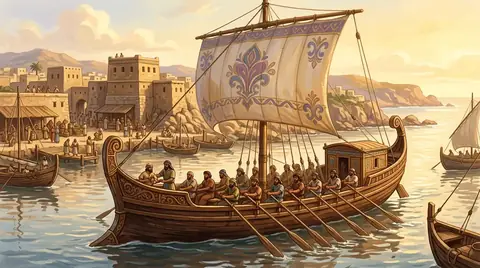 Place · CityTyreThe great trading port of Phoenicia, on the coast north of Israel. Its king Hiram helped build Solomon's temple; later…
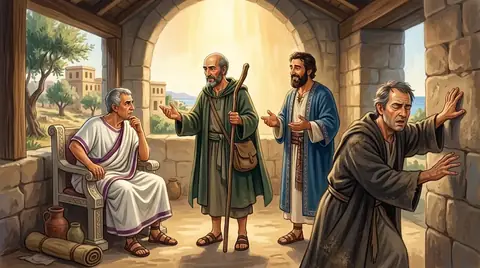 Place · IslandCyprusA large island off the coast of Syria, the home of Barnabas and the first stop on Paul's first missionary journey.…
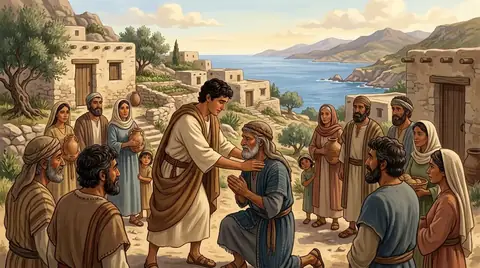 Place · IslandCreteThe large island south of Greece. Cretans heard the gospel at Pentecost, Paul's ship sheltered there before the great…
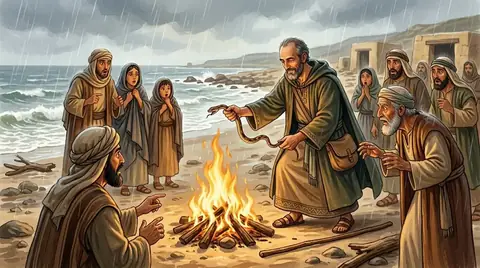 Place · IslandMaltaThe island south of Sicily where Paul's ship was wrecked on his way to Rome. Everyone on board reached shore safely…
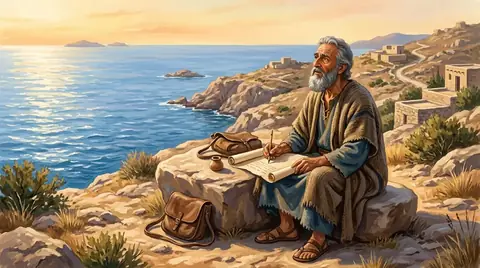 Place · IslandPatmosA small, rocky island in the Aegean Sea where the apostle John was sent "for the word of God", and where he saw the…
Written for this app in its own words, from the Bible, with the facts checked against Bible dictionaries and encyclopedias: Easton's, Smith's, Fausset's, ISBE, Holman, the New Bible Dictionary, Vine's and the Thompson Chain topics.
