
Person
Interpreter
One who explains a dream or puts a message into another language
Someone who explains what is hidden or puts words into another language. Joseph and Daniel interpreted dreams by God's help; in the church at Corinth, some interpreted speaking in tongues.
- Of dreams
- Joseph (Genesis 40:8; Genesis 41:16); Daniel (Daniel 2:27–28)
- Of languages
- Joseph's interpreter (Genesis 42:23); the Levites giving the sense of the law (Nehemiah 8:8)
- In the church
- The gift of interpreting tongues (1 Corinthians 12:10; 1 Corinthians 14:27–28)
When Pharaoh's butler and baker told Joseph they had dreamed and there was no interpreter, he answered, "Do not interpretations belong to God?" (Genesis 40:8). Later he told Pharaoh, "It is not in me: God shall give Pharaoh an answer" (Genesis 41:16), and Daniel said the same to Nebuchadnezzar (Daniel 2:27–28).
The word is also used of language. Joseph spoke to his brothers through an interpreter, so they did not know he understood them (Genesis 42:23). In Ezra's day the Levites read the law and "gave the sense" so the people understood (Nehemiah 8:8). Paul said that tongues in church must be interpreted; "if there be no interpreter, let him keep silence" (1 Corinthians 14:27–28).
Key verses
- Genesis 40:8
And they said unto him, We have dreamed a dream, and there is no interpreter of it. And Joseph said unto them, Do not interpretations belong to God? tell me them, I pray you.
- Genesis 42:23
And they knew not that Joseph understood them; for he spake unto them by an interpreter.
- Nehemiah 8:8
So they read in the book in the law of God distinctly, and gave the sense, and caused them to understand the reading.
- 1 Corinthians 14:27–28
If any man speak in an unknown tongue, let it be by two, or at the most by three, and that by course; and let one interpret. But if there be no interpreter, let him keep silence in the church; and let him speak to himself, and to God.
Read next
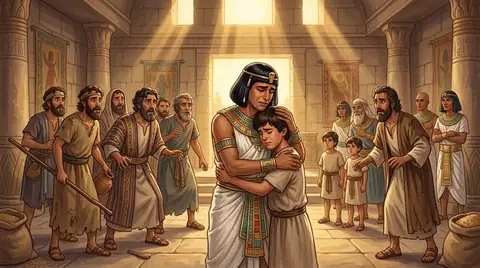 PersonJosephJacob's favourite son, sold by his brothers into Egypt, where he rose from prison to rule the land and saved his family…
 Person · ProphetDanielA young noble of Judah carried off to Babylon, who served four kings with wisdom and never bent his faith. God gave him…TeachingGift of TonguesThe power the Holy Spirit gave to speak in languages the speaker had never learned. It came first at Pentecost, when…
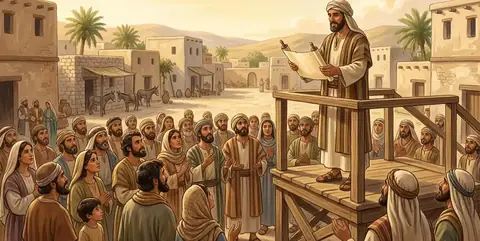 PersonEzraA priest and scribe who led a second group of exiles back from Babylon, taught the people God's law and read it to them…
Written for this app in its own words, from the Bible, with the facts checked against Bible dictionaries and encyclopedias: Easton's, Smith's, Fausset's, ISBE, Holman, the New Bible Dictionary, Vine's and the Thompson Chain topics.
