
Book
Haggai (book)
Old Testament · Prophets, a minor prophet · written by Haggai, 520 BC
Four short messages, all given in 520 BC, urging the Jews back from exile to stop neglecting God's house and finish rebuilding the temple, with the promise that its glory would be greater.
- Author
- Haggai
- Written
- 520 BC, in four messages dated within the same year
- Chapters
- 2
- Key verse
- "The glory of this latter house shall be greater than of the former" (Haggai 2:9)
What it's about
The Jews who returned from Babylon had laid the temple's foundation, but opposition stopped the work, and for about sixteen years the site lay in ruins while the people built themselves fine houses. Haggai asked, "Is it time for you, O ye, to dwell in your cieled houses, and this house lie waste?" (Haggai 1:4). Their poor harvests and empty purses were God's warning: "Consider your ways" (Haggai 1:5).
The governor Zerubbabel, the high priest Joshua and the people listened, and within weeks the work began again (Haggai 1:12–15; Ezra 5:1–2). When some were disappointed that the new temple looked so plain, Haggai told them to be strong, for God was with them and would fill this house with glory.
Its message
Put God first. When we neglect what matters to him, our own efforts do not satisfy. But when his people obey, he says, "I am with you" (Haggai 1:13).
Points to Christ
God promised to shake the nations and that "the desire of all nations shall come" (Haggai 2:7). The second temple's greater glory came when the Lord Jesus himself taught in its courts. God also made Zerubbabel like a signet ring (Haggai 2:23), and Zerubbabel's name stands in Jesus' family line (Matthew 1:12).
Key verses
- Haggai 1:4–6
Is it time for you, O ye, to dwell in your cieled houses, and this house lie waste? Now therefore thus saith the Lord of hosts; Consider your ways. Ye have sown much, and bring in little; ye eat, but ye have not enough; ye drink, but ye are not filled with drink; ye clothe you, but there is none warm; and he that earneth wages earneth wages to put it into a bag with holes.
- Haggai 1:13
Then spake Haggai the Lord’s messenger in the Lord’s message unto the people, saying, I am with you, saith the Lord.
- Haggai 2:4–5
Yet now be strong, O Zerubbabel, saith the Lord; and be strong, O Joshua, son of Josedech, the high priest; and be strong, all ye people of the land, saith the Lord, and work: for I am with you, saith the Lord of hosts: According to the word that I covenanted with you when ye came out of Egypt, so my spirit remaineth among you: fear ye not.
- Haggai 2:7–9
And I will shake all nations, and the desire of all nations shall come: and I will fill this house with glory, saith the Lord of hosts. The silver is mine, and the gold is mine, saith the Lord of hosts. The glory of this latter house shall be greater than of the former, saith the Lord of hosts: and in this place will I give peace, saith the Lord of hosts.
- Haggai 2:23
In that day, saith the Lord of hosts, will I take thee, O Zerubbabel, my servant, the son of Shealtiel, saith the Lord, and will make thee as a signet: for I have chosen thee, saith the Lord of hosts.
On the map
Read next
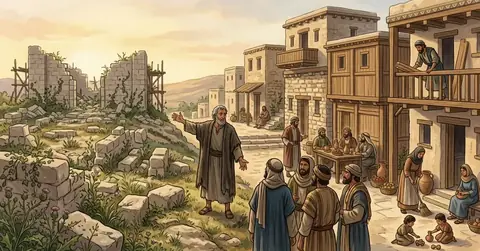 PersonHaggaiThe prophet who, in 520 BC, roused the Jews back from exile to finish rebuilding the temple they had neglected for…
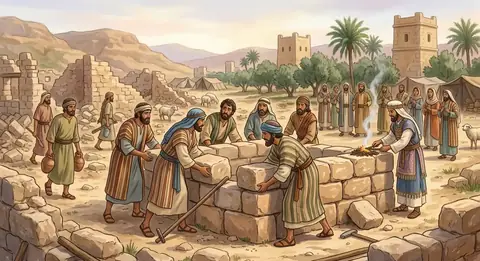 PersonZerubbabelThe prince of David's line who led the first exiles home from Babylon and rebuilt the temple in Jerusalem, finishing it…
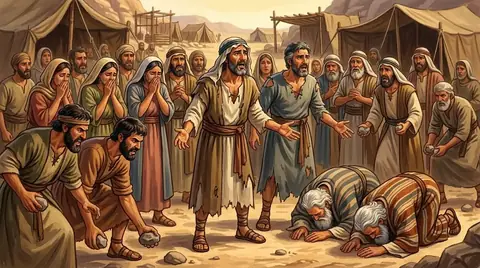 PersonJoshuaMoses' helper who took over from him and led Israel across the Jordan into the Promised Land. He fought the wars of…
Written for this app in its own words, from the Bible, with the facts checked against Bible dictionaries and encyclopedias: Easton's, Smith's, Fausset's, ISBE, Holman, the New Bible Dictionary, Vine's and the Thompson Chain topics.
