
Custom · Sacrifice
Fat
The best part of an animal, which belonged to God
The rich fat of a sacrifice was burned on the altar and never eaten: "all the fat is the LORD's". The word also stands for the best of anything, and a fat heart is a dull, proud one.
- Law
- Burned on the altar (Leviticus 3:16); not to be eaten (Leviticus 7:23–25)
- Figurative
- "The fat of the land" (Genesis 45:18); "the finest of the wheat" (Psalms 81:16); a heart "as fat as grease" (Psalms 119:70)
In the sacrifices
When an animal was offered, the fat round its organs and kidneys, and on a sheep the whole fat tail, was taken off and burned on the altar as "a sweet savour unto the LORD" (Leviticus 3:3–5, 9–11). The rule was plain: "all the fat is the LORD's" (Leviticus 3:16). Israel was not to eat the fat of cattle, sheep or goats at all (Leviticus 7:23–25). The first sacrifice the Bible describes was Abel's, who brought the firstborn of his flock "and of the fat thereof" (Genesis 4:4). Eli's sons showed their contempt for God by grabbing the meat before the fat had been burned (1 Samuel 2:15–16). Giving God the fat meant giving him the richest part first.
As a picture
Because fat was the best, "the fat of the land" meant Egypt's finest produce (Genesis 45:18), and "the fat of the wheat" is the finest flour (Psalms 81:16; Psalms 147:14). God's coming feast is "a feast of fat things" (Isaiah 25:6). But a fat heart is a bad thing: smug, unfeeling and deaf to God, like Israel which "waxed fat, and kicked" (Deuteronomy 32:15; Isaiah 6:10). In Joel 2:24 the "fats" are vats for wine and oil.
Key verses
- Leviticus 3:16
And the priest shall burn them upon the altar: it is the food of the offering made by fire for a sweet savour: all the fat is the Lord’s.
- Leviticus 7:23
Speak unto the children of Israel, saying, Ye shall eat no manner of fat, of ox, or of sheep, or of goat.
- Genesis 4:4
And Abel, he also brought of the firstlings of his flock and of the fat thereof. And the Lord had respect unto Abel and to his offering:
- 1 Samuel 2:15–16
Also before they burnt the fat, the priest’s servant came, and said to the man that sacrificed, Give flesh to roast for the priest; for he will not have sodden flesh of thee, but raw. And if any man said unto him, Let them not fail to burn the fat presently, and then take as much as thy soul desireth; then he would answer him, Nay; but thou shalt give it me now: and if not, I will take it by force.
- Deuteronomy 32:15
But Jeshurun waxed fat, and kicked: thou art waxen fat, thou art grown thick, thou art covered with fatness; then he forsook God which made him, and lightly esteemed the Rock of his salvation.
Read next
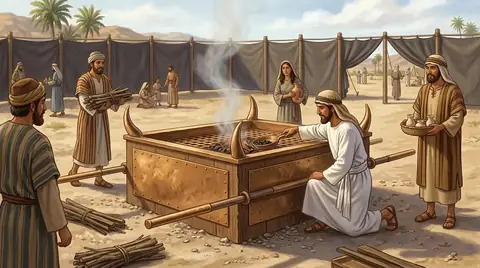 Thing · WorshipThe altarA raised structure of earth, stone or bronze on which sacrifices were offered to God. The big bronze altar stood in the…
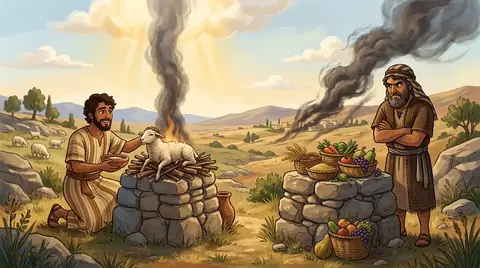 PersonAbelThe second son of Adam and Eve, a shepherd whose offering God accepted. His jealous brother Cain murdered him, making…
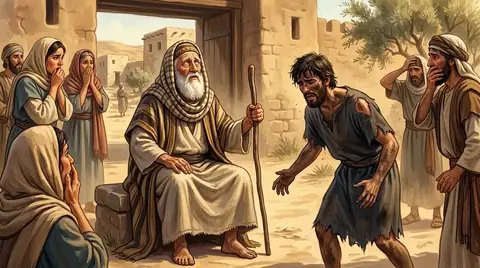 PersonEliThe old high priest at Shiloh who raised the boy Samuel. A kind man, he failed to restrain his wicked sons, and died…
Written for this app in its own words, from the Bible, with the facts checked against Bible dictionaries and encyclopedias: Easton's, Smith's, Fausset's, ISBE, Holman, the New Bible Dictionary, Vine's and the Thompson Chain topics.
