
Saying · Teaching
Fable
A made-up tale; in the New Testament, an empty religious story
In the New Testament a fable is a man-made religious story with no truth in it, to be avoided. The Old Testament has two true fables in the older sense: short tales about trees to make a point.
In the New Testament
Paul uses the word (Greek mythos, "myth") for the stories and speculations some teachers were spreading in the churches: "fables and endless genealogies" (1 Timothy 1:4), "profane and old wives' fables" (1 Timothy 4:7), "Jewish fables" (Titus 1:14). He warned that a day would come when people would turn away from the truth to such tales (2 Timothy 4:4). Peter answers the charge that the gospel itself is one: "we have not followed cunningly devised fables", he says, "but were eyewitnesses" of Christ's glory (2 Peter 1:16). Christianity rests on things that happened and were seen.
Fables in the Old Testament
In the older sense of the word, a fable is a short tale in which trees or animals speak, told to make a point. Jotham told one from the top of Mount Gerizim after his brother Abimelech murdered their family: the trees asked the olive, the fig and the vine to be their king, and each refused to give up its useful work, so the worthless bramble took the crown and threatened to burn them all (Judges 9:8–15). King Jehoash of Israel answered a challenge from Amaziah of Judah with another: a thistle in Lebanon asked a cedar for his daughter, and a wild beast walked by and trampled the thistle (2 Kings 14:9). Neither story is false; each is a true lesson in a picture, like the parables of Jesus.
Key verses
- 1 Timothy 1:4
Neither give heed to fables and endless genealogies, which minister questions, rather than godly edifying which is in faith: so do.
- 2 Peter 1:16
For we have not followed cunningly devised fables, when we made known unto you the power and coming of our Lord Jesus Christ, but were eyewitnesses of his majesty.
- Judges 9:8–15
The trees went forth on a time to anoint a king over them; and they said unto the olive tree, Reign thou over us. But the olive tree said unto them, Should I leave my fatness, wherewith by me they honour God and man, and go to be promoted over the trees? And the trees said to the fig tree, Come thou, and reign over us. …
- 2 Kings 14:9
And Jehoash the king of Israel sent to Amaziah king of Judah, saying, The thistle that was in Lebanon sent to the cedar that was in Lebanon, saying, Give thy daughter to my son to wife: and there passed by a wild beast that was in Lebanon, and trode down the thistle.
Read next
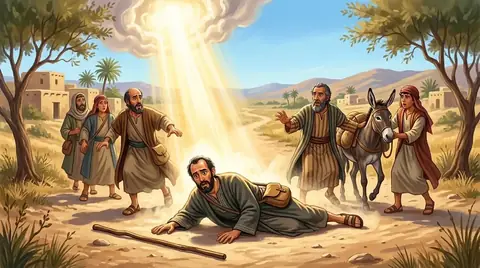 PersonPaulA Pharisee who hated the church until the risen Jesus met him on the road to Damascus. He became the apostle to the…
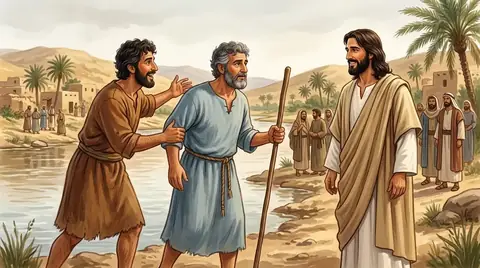 PersonPeterA Galilean fisherman who became the leader of the twelve apostles. Bold and impulsive, he confessed Jesus as the…
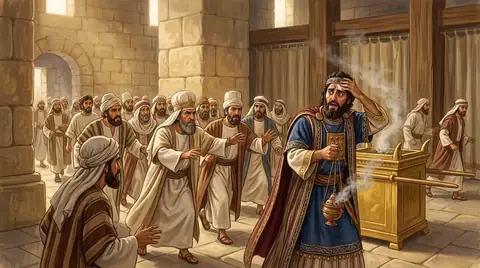 PersonJothamA good king of Judah who ruled for his leprous father Uzziah and then in his own right. He built the temple's upper…
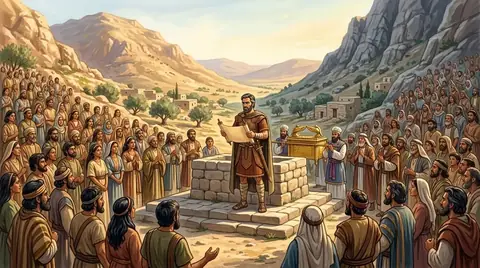 Place · MountainMount GerizimThe mountain south of Shechem, facing Mount Ebal. Israel spoke the blessings of the law from it, Jotham told his…
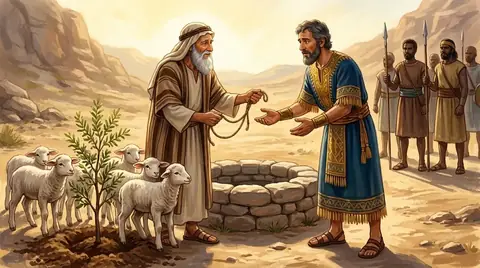 PersonAbimelechThe name of the kings of Gerar who dealt with Abraham and Isaac over their wives, and of Gideon's ruthless son who…
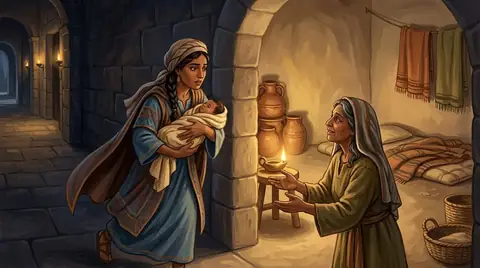 PersonJoashThe baby prince hidden in the temple for six years and crowned at seven. He repaired the temple while the priest…
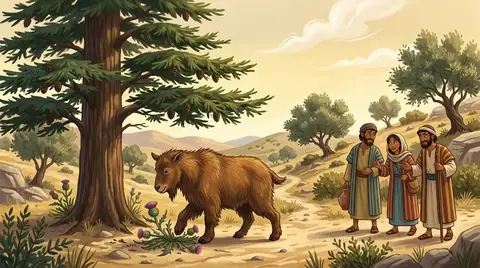 Person · KingAmaziahA king of Judah who began well, beat Edom with God's help, then bowed to Edom's idols and picked a foolish war with…
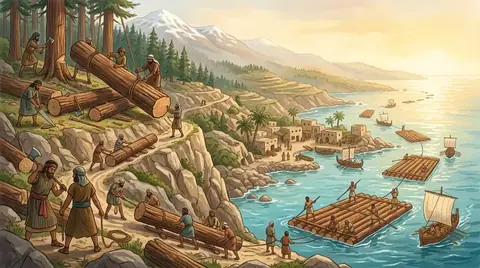 Plant · SymbolThe cedarThe great tree of Lebanon, tall, fragrant and long-lasting, whose timber built Solomon's temple and palace. In the…
Written for this app in its own words, from the Bible, with the facts checked against Bible dictionaries and encyclopedias: Easton's, Smith's, Fausset's, ISBE, Holman, the New Bible Dictionary, Vine's and the Thompson Chain topics.
