
Teaching · Title of Christ
The Everlasting Father
"His name shall be called… The everlasting Father" (Isa 9:6)
One of the four names Isaiah gives the promised child. It means he lives for ever and looks after his people like a father, without end. It is not saying that the Son is God the Father.
- Hebrew
- Abi-ad, "father of eternity"
- Also called
- Wonderful, Counsellor, The mighty God, The Prince of Peace (Isaiah 9:6)
The name
Isaiah promised a child born to rule on David's throne for ever, and gave him four names. The third is "The everlasting Father" (Isaiah 9:6). The Hebrew words are "father of eternity". In the Bible a man is often called the father of what he does or owns: Jabal is the father of tent-dwellers (Genesis 4:20), and God calls Eliakim a father to the people of Jerusalem because he will govern and protect them (Isaiah 22:21). So the name means a king who owns eternity, who lives for ever and whose fatherly care never stops (see A Son Given).
Not God the Father
The name does not mix up the persons of God. The Son is not the Father; he prays to the Father and is sent by him (John 17:1–3). But he is just as eternal as the Father, "the same yesterday, and to day, and for ever" (Hebrews 13:8), and he treats his people as his children. He called his disciples "little children" (John 13:33), and Hebrews puts Isaiah's words on his lips: "Behold I and the children which God hath given me" (Hebrews 2:13).
For us
A father provides, protects and stays. This Father cannot die, cannot change and cannot be taken away. "Of the increase of his government and peace there shall be no end" (Isaiah 9:7).
Key verses
- Isaiah 9:6–7
For unto us a child is born, unto us a son is given: and the government shall be upon his shoulder: and his name shall be called Wonderful, Counsellor, The mighty God, The everlasting Father, The Prince of Peace. Of the increase of his government and peace there shall be no end, upon the throne of David, and upon his kingdom, to order it, and to establish it with judgment and with justice from henceforth even for ever. The zeal of the Lord of hosts will perform this.
- Hebrews 2:13
And again, I will put my trust in him. And again, Behold I and the children which God hath given me.
- Hebrews 13:8
Jesus Christ the same yesterday, and to day, and for ever.
- Revelation 1:18
I am he that liveth, and was dead; and, behold, I am alive for evermore, Amen; and have the keys of hell and of death.
Read next
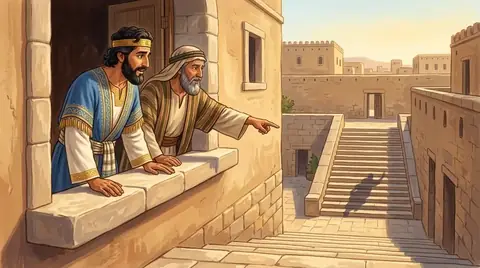 Person · ProphetIsaiahThe prophet of Jerusalem who served four kings, saw the LORD on his throne, and foretold the virgin's son, the…
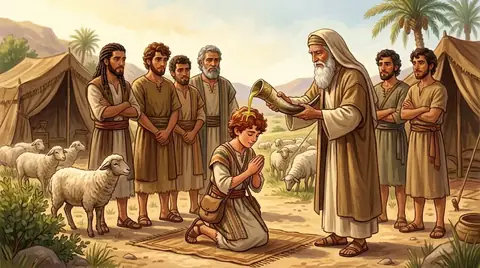 Person · KingDavidThe shepherd boy who killed Goliath and became Israel's greatest king, "a man after God's own heart". He wrote many…
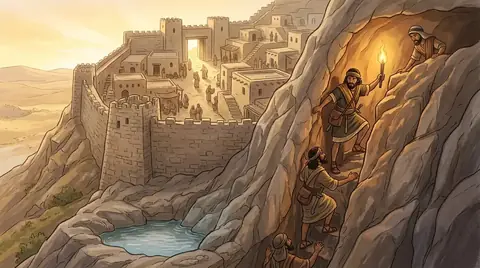 PlaceJerusalemThe city David made his capital and where Solomon built the temple. Jesus died and rose there and the church began…Teaching · Title of ChristA Son GivenIsaiah's prophecy of the Messiah. The child was born in Bethlehem; the Son, however, was given: he already existed…
Written for this app in its own words, from the Bible, with the facts checked against Bible dictionaries and encyclopedias: Easton's, Smith's, Fausset's, ISBE, Holman, the New Bible Dictionary, Vine's and the Thompson Chain topics.
