
Nature · Wind
Euroclydon
yoo-ROK-li-donActs 27:14 · a violent north-east gale in the Mediterranean
The stormy north-east wind that caught Paul's ship off Crete and drove it for two weeks until it was wrecked on Malta. Sailors today still dread the same winter gale.
- Where
- Off Crete, then across the open sea to Malta
- Meaning
- A name made from the Greek for the east wind and the Latin for the north wind; older texts read it as "east wind and waves"
- Known for
- Paul's shipwreck (Acts 27)
What it was
Euroclydon is the name Luke gives to the wind in the story of Paul's voyage to Rome (Acts 27:14). Sailing was already dangerous so late in the year, and Paul had warned the crew. But when a soft south wind came, the captain left the harbour of Fair Havens hoping to reach a better port for the winter. Soon afterwards a gale swept down from the island of Crete with hurricane force, and the ship could do nothing but run before it.
For fourteen days the crew saw neither sun nor stars. They tied ropes under the hull, threw the cargo and the ship's gear overboard, and gave up hope. Only Paul, told by an angel that no one would die, kept their spirits up (Acts 27:22–25). At last the ship ran aground on Malta and broke up, and all 276 people on board reached the shore alive (Acts 27:44).
What it means
The same storm wind blows in the Mediterranean every winter, and sailors give it a similar name today. The story shows God keeping his word to Paul through a storm he did not stop, and a believer who stayed calm and useful while everyone else panicked. Compare the storm God sent after Jonah (Jonah 1:4), which ended only when Jonah went overboard.
Key verses
- Acts 27:14–15
But not long after there arose against it a tempestuous wind, called Euroclydon. And when the ship was caught, and could not bear up into the wind, we let her drive.
- Acts 27:22–25
And now I exhort you to be of good cheer: for there shall be no loss of any man’s life among you, but of the ship. For there stood by me this night the angel of God, whose I am, and whom I serve, Saying, Fear not, Paul; thou must be brought before Cesar: and, lo, God hath given thee all them that sail with thee. …
- Acts 27:44
And the rest, some on boards, and some on broken pieces of the ship. And so it came to pass, that they escaped all safe to land.
- Jonah 1:4
But the Lord sent out a great wind into the sea, and there was a mighty tempest in the sea, so that the ship was like to be broken.
On the map
Read next
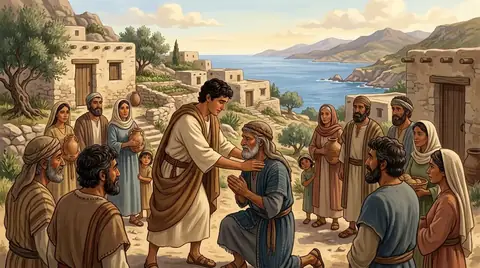 Place · IslandCreteThe large island south of Greece. Cretans heard the gospel at Pentecost, Paul's ship sheltered there before the great…
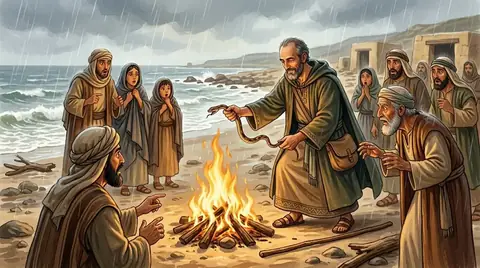 Place · IslandMaltaThe island south of Sicily where Paul's ship was wrecked on his way to Rome. Everyone on board reached shore safely…
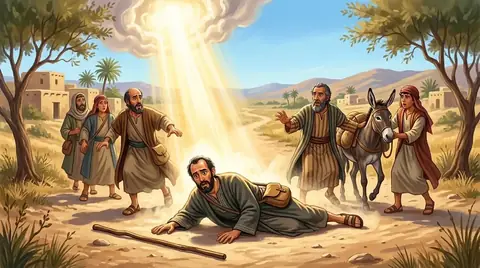 PersonPaulA Pharisee who hated the church until the risen Jesus met him on the road to Damascus. He became the apostle to the…
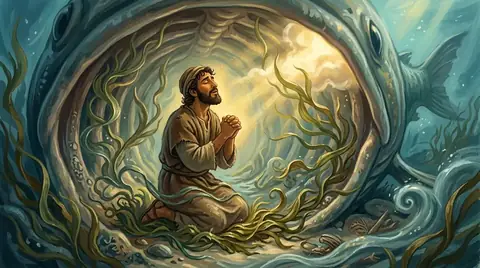 PersonJonahThe prophet who ran from God's call to preach at Nineveh, was swallowed by a great fish, and then sulked when the city…
Written for this app in its own words, from the Bible, with the facts checked against Bible dictionaries and encyclopedias: Easton's, Smith's, Fausset's, ISBE, Holman, the New Bible Dictionary, Vine's and the Thompson Chain topics.
