
Custom · Marriage
Dowry
In Bible times the dowry was a gift the bridegroom gave to the bride's father, to show he was serious and to make up for the loss of a daughter. Jacob paid his in years of work.
- Hebrew
- Mohar, the bride price (Genesis 34:12; Exodus 22:17; 1 Samuel 18:25)
- Examples
- Jacob's fourteen years for Rachel (Genesis 29:18–27); Shechem's offer for Dinah (Genesis 34:12); David's hundred Philistines for Michal (1 Samuel 18:25)
Today a dowry is what a bride brings to her husband. In the Bible it was the other way round. A young man, or his father, gave money or goods to the girl's family before the wedding. The gift was partly compensation, since a daughter's work was lost to her home, and partly a bond that bound the two families. A man who seduced a girl had to pay the bride price whether or not her father let him marry her (Exodus 22:16–17). The gift could take other forms. Jacob had nothing to give, so he served Laban seven years for Rachel, and was tricked into fourteen (Genesis 29:18–27). Saul asked David for a hundred dead Philistines, hoping David would die getting them (1 Samuel 18:25). Pharaoh gave the city of Gezer as a wedding present with his daughter (1 Kings 9:16).
Alongside the bride price, a father often gave his daughter servants or land of her own, as Laban gave Zilpah and Bilhah (Genesis 29:24,29) and Caleb gave Achsah springs of water (Joshua 15:19). The custom made marriage a public covenant, not a private arrangement; the prophets could even picture God paying a bride price for Israel in righteousness and mercy (Hosea 2:19–20).
Key verses
- Genesis 29:18–20
And Jacob loved Rachel; and said, I will serve thee seven years for Rachel thy younger daughter. And Laban said, It is better that I give her to thee, than that I should give her to another man: abide with me. And Jacob served seven years for Rachel; and they seemed unto him but a few days, for the love he had to her.
- Genesis 34:12
Ask me never so much dowry and gift, and I will give according as ye shall say unto me: but give me the damsel to wife.
- Exodus 22:16–17
And if a man entice a maid that is not betrothed, and lie with her, he shall surely endow her to be his wife. If her father utterly refuse to give her unto him, he shall pay money according to the dowry of virgins.
- 1 Samuel 18:25
And Saul said, Thus shall ye say to David, The king desireth not any dowry, but an hundred foreskins of the Philistines, to be avenged of the king’s enemies. But Saul thought to make David fall by the hand of the Philistines.
Read next
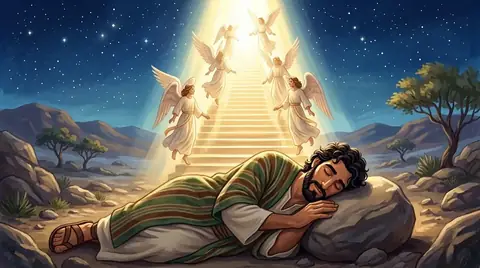 PersonJacobIsaac's younger twin son, who won his brother's birthright and blessing by cunning, was changed by God, and was renamed…
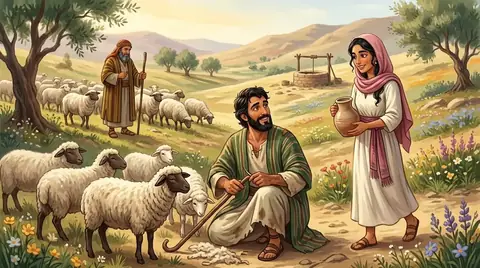 PersonLabanRebekah's brother in Haran, the father of Leah and Rachel. He took Jacob in, tricked him into marrying both daughters…
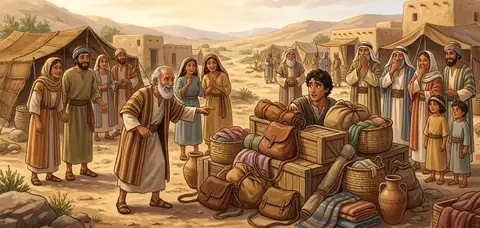 Person · KingSaulIsrael's first king, a tall Benjamite chosen when the people demanded a king like the nations. He began humbly and won…
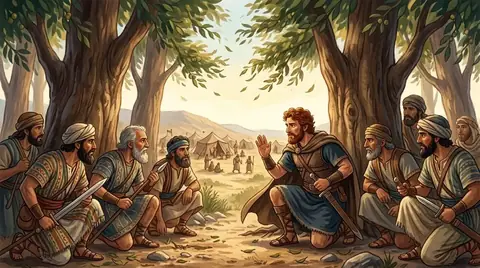 Place · CityGezerA Canaanite royal city on the road from the coast up to Jerusalem. Joshua killed its king, but its people were never…
Written for this app in its own words, from the Bible, with the facts checked against Bible dictionaries and encyclopedias: Easton's, Smith's, Fausset's, ISBE, Holman, the New Bible Dictionary, Vine's and the Thompson Chain topics.
