
Book
Deuteronomy
doo-ter-ON-o-meeOld Testament · Law, the fifth book of Moses · written by Moses, about 1405 BC
The fifth book of the Bible: Moses' farewell speeches to Israel on the plains of Moab, calling the new generation to love the LORD and keep his law as they enter the promised land.
- Author
- Moses; the account of his death (Deuteronomy 34) was added, traditionally by Joshua
- Written
- About 1405 BC, in the last month of Moses' life
- Chapters
- 34
- Key verse
- "Thou shalt love the LORD thy God with all thine heart" (Deuteronomy 6:5)
What it's about
The name means "second law", for here Moses gives the law again to the children of those who had come out of Egypt. Camped east of the Jordan, he looks back over the forty years, repeats the Ten Commandments (Deuteronomy 5), and explains how Israel is to worship and live in Canaan.
He sets out blessings for obedience and curses for disobedience, and urges the people to "choose life" (Deuteronomy 30:19). The book ends with Moses' song and blessing, and his death on Mount Nebo after he has seen the land from afar.
Its message
God's love came first: he chose Israel not because they were great but because he loved them (Deuteronomy 7:7–8). Their part was to love him back with all their heart, teach his words to their children, and never forget him once they were rich and settled. The great words "Hear, O Israel: The LORD our God is one LORD" (Deuteronomy 6:4) became Israel's daily creed.
Points to Christ
Moses promised that God would raise up a prophet like him, to whom the people must listen (Deuteronomy 18:15). Peter said this was Jesus (Acts 3:22). When he was tempted in the wilderness, Jesus answered the devil three times from Deuteronomy, beginning "man shall not live by bread alone" (Matthew 4:4; Deuteronomy 8:3).
Key verses
- Deuteronomy 6:4–5
Hear, O Israel: The Lord our God is one Lord: And thou shalt love the Lord thy God with all thine heart, and with all thy soul, and with all thy might.
- Deuteronomy 7:9
Know therefore that the Lord thy God, he is God, the faithful God, which keepeth covenant and mercy with them that love him and keep his commandments to a thousand generations;
- Deuteronomy 8:3
And he humbled thee, and suffered thee to hunger, and fed thee with manna, which thou knewest not, neither did thy fathers know; that he might make thee know that man doth not live by bread only, but by every word that proceedeth out of the mouth of the Lord doth man live.
- Deuteronomy 18:15
The Lord thy God will raise up unto thee a Prophet from the midst of thee, of thy brethren, like unto me; unto him ye shall hearken;
- Deuteronomy 30:19–20
I call heaven and earth to record this day against you, that I have set before you life and death, blessing and cursing: therefore choose life, that both thou and thy seed may live: That thou mayest love the Lord thy God, and that thou mayest obey his voice, and that thou mayest cleave unto him: for he is thy life, and the length of thy days: that thou mayest dwell in the land which the Lord sware unto thy fathers, to Abraham, to Isaac, and to Jacob, to give them.
- Deuteronomy 31:6
Be strong and of a good courage, fear not, nor be afraid of them: for the Lord thy God, he it is that doth go with thee; he will not fail thee, nor forsake thee.
On the map
Read next
 PersonMosesThe man God used to bring Israel out of Egypt, give them his Law at Sinai, and lead them for forty years in the…
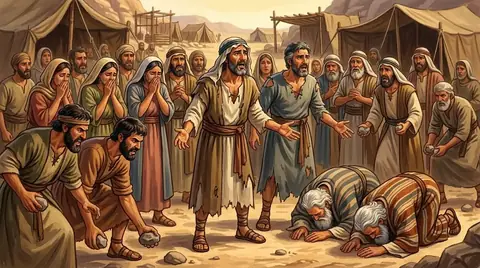 PersonJoshuaMoses' helper who took over from him and led Israel across the Jordan into the Promised Land. He fought the wars of…Place · RiverJordanThe river of the Bible: Israel crossed it on dry ground into the promised land, Elijah and Elisha parted it, Naaman…
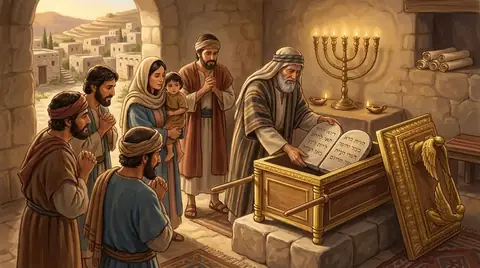 Teaching · LawDecalogueThe Ten Commandments, which God spoke from Mount Sinai and wrote with his own finger on two stone tablets. They sum up…
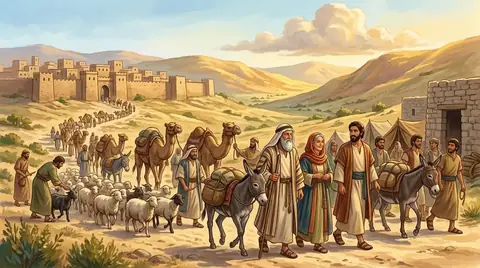 PlaceCanaanThe land between the Jordan and the Mediterranean that God promised to Abraham and gave to Israel under Joshua. It took…
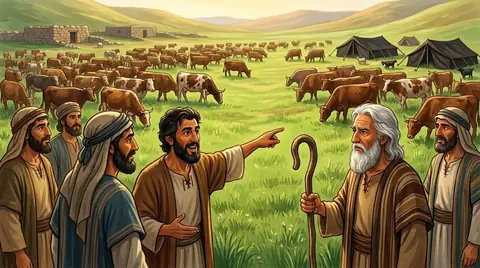 PlaceNeboA town east of the Dead Sea, rebuilt by the tribe of Reuben and later taken back by Moab. The prophets name it among…
Written for this app in its own words, from the Bible, with the facts checked against Bible dictionaries and encyclopedias: Easton's, Smith's, Fausset's, ISBE, Holman, the New Bible Dictionary, Vine's and the Thompson Chain topics.
