
Measure · Money
Daric (dram)
DAR-ik
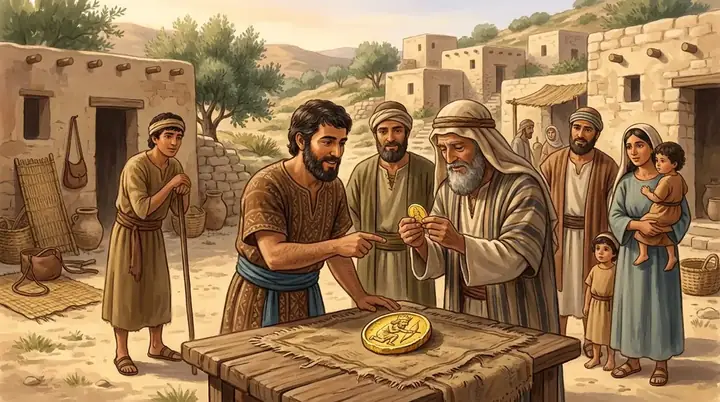
A gold coin of the Persian Empire, named after King Darius and stamped with the king as an archer. The KJV calls it a dram. The returned exiles gave 61,000 of them towards the temple.
- Weight
- Nearly pure gold, about 0.3 oz (8.4 g)
- Worth
- Roughly a month's pay for a soldier
- Where
- 1 Chronicles 29:7; Ezra 2:69; Ezra 8:27; Nehemiah 7:70–72
What it was
Before coins, people paid in weighed silver and gold. The daric was the first coin the Bible names: a lump of gold stamped by the Persian kings, who took its design, a crowned king running with bow and spear, from Darius I. It was accepted all over the empire, from Egypt to India.
In the Bible
When Ezra lists the gifts for rebuilding the temple, the heads of families gave sixty-one thousand gold darics (Ezra 2:69), and Ezra himself brought twenty gold bowls worth a thousand darics (Ezra 8:27). Nehemiah's list of givers counts in darics too (Nehemiah 7:70–72). The Chronicler, writing after the exile, even sums up the gold given for the temple of Solomon in darics (1 Chronicles 29:7), using the money his readers knew, though the people of David had paid by weight.
Key verses
- 1 Chronicles 29:7
And gave for the service of the house of God of gold five thousand talents and ten thousand drams, and of silver ten thousand talents, and of brass eighteen thousand talents, and one hundred thousand talents of iron.
- Ezra 2:69
They gave after their ability unto the treasure of the work threescore and one thousand drams of gold, and five thousand pound of silver, and one hundred priests’ garments.
- Ezra 8:27
Also twenty basons of gold, of a thousand drams; and two vessels of fine copper, precious as gold.
- Nehemiah 7:70–72
And some of the chief of the fathers gave unto the work. The Tirshatha gave to the treasure a thousand drams of gold, fifty basons, five hundred and thirty priests’ garments. And some of the chief of the fathers gave to the treasure of the work twenty thousand drams of gold, and two thousand and two hundred pound of silver. And that which the rest of the people gave was twenty thousand drams of gold, and two thousand pound of silver, and threescore and seven priests’ garments.
Read next
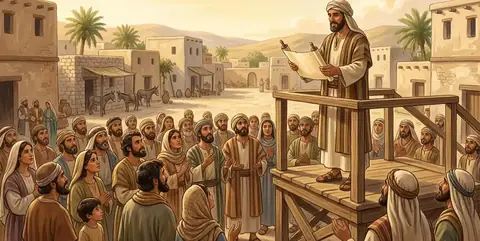 PersonEzraA priest and scribe who led a second group of exiles back from Babylon, taught the people God's law and read it to them…
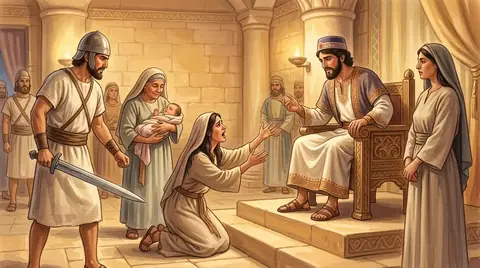 Person · KingSolomonDavid's son and Israel's third king, who asked God for wisdom and received riches and fame as well. He built the temple…
 Person · KingDavidThe shepherd boy who killed Goliath and became Israel's greatest king, "a man after God's own heart". He wrote many…
Written for this app in its own words, from the Bible, with the facts checked against Bible dictionaries and encyclopedias: Easton's, Smith's, Fausset's, ISBE, Holman, the New Bible Dictionary, Vine's and the Thompson Chain topics.
