
Teaching
Covenant of Works
The name theologians give to God's first arrangement with Adam, who stood for all mankind: life on condition of perfect obedience, death for disobedience. Adam broke it; Christ, the second Adam, kept it for his people.
What it was
In Eden God gave Adam every good thing and one command: not to eat of the tree of the knowledge of good and evil, "for in the day that thou eatest thereof thou shalt surely die" (Genesis 2:16–17). Many in the church have called this a covenant of works, because life depended on obedience. Hosea seems to speak of it: "they like men have transgressed the covenant", where "men" can also be read "Adam" (Hosea 6:7).
How it failed
Adam disobeyed, and because he stood for the whole race, "by one man sin entered into the world, and death by sin; and so death passed upon all men" (Romans 5:12). No one since can earn life by keeping the law: "by the deeds of the law there shall no flesh be justified" (Romans 3:20).
In Christ
God answered with the covenant of grace. Jesus, the "last Adam", obeyed where Adam failed, even to death, so that "by the obedience of one shall many be made righteous" (Romans 5:19; 1 Corinthians 15:45). What we could not do, he did for us. See Covenant.
Key verses
- Genesis 2:16–17
And the Lord God commanded the man, saying, Of every tree of the garden thou mayest freely eat: But of the tree of the knowledge of good and evil, thou shalt not eat of it: for in the day that thou eatest thereof thou shalt surely die.
- Hosea 6:7
But they like men have transgressed the covenant: there have they dealt treacherously against me.
- Romans 5:12
Wherefore, as by one man sin entered into the world, and death by sin; and so death passed upon all men, for that all have sinned:
- Romans 5:19
For as by one man’s disobedience many were made sinners, so by the obedience of one shall many be made righteous.
- 1 Corinthians 15:45
And so it is written, The first man Adam was made a living soul; the last Adam was made a quickening spirit.
Read next
 Place · GardenEdenThe garden God planted "eastward in Eden" as a home for the first man and woman, with every good tree, the tree of…
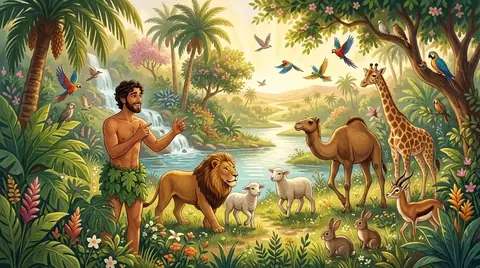 PersonAdamThe first man, made by God from the dust and given life by his breath. His disobedience in Eden brought sin and death…
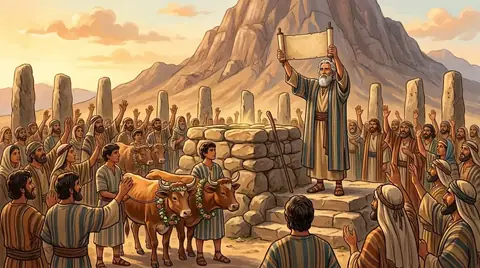 TeachingCovenantA solemn, binding agreement. God made covenants with Noah, Abraham, Israel and David, each with a promise and a sign…
Written for this app in its own words, from the Bible, with the facts checked against Bible dictionaries and encyclopedias: Easton's, Smith's, Fausset's, ISBE, Holman, the New Bible Dictionary, Vine's and the Thompson Chain topics.
