
Place · Custom
Colony
New Testament · a Roman settlement abroad · Philippi
A Roman colony was a town abroad settled by Roman citizens, often old soldiers, with the rights of a town in Italy. Philippi, where Paul founded the first church in Europe, was one.
- Where
- Philippi, in Macedonia (Acts 16:12)
- Rights
- Its people were Roman citizens, under Roman law
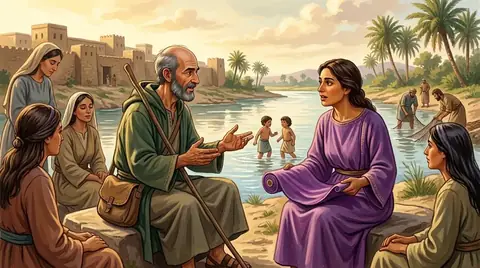
When Paul crossed into Europe, he came to "Philippi, which is the chief city of that part of Macedonia, and a colony" (Acts 16:12). A colony was like a small piece of Rome planted far from Rome. Its settlers, many of them retired soldiers, kept Roman law and customs and governed themselves as if they lived in Italy. So the people of Philippi were proud of being Romans. When they accused Paul and Silas, they said these Jews taught customs "not lawful for us to receive, neither to observe, being Romans" (Acts 16:20–21).
This helps explain Paul's later letter to the Philippians. "Our conversation", our citizenship, "is in heaven", he wrote (Philippians 3:20). The church was a colony of heaven, living by heaven's ways in a foreign land while waiting for its King.
Key verses
- Acts 16:12
And from thence to Philippi, which is the chief city of that part of Macedonia, and a colony: and we were in that city abiding certain days.
- Acts 16:20–21
And brought them to the magistrates, saying, These men, being Jews, do exceedingly trouble our city, And teach customs, which are not lawful for us to receive, neither to observe, being Romans.
- Philippians 3:20
For our conversation is in heaven; from whence also we look for the Saviour, the Lord Jesus Christ:
Read next
Written for this app in its own words, from the Bible, with the facts checked against Bible dictionaries and encyclopedias: Easton's, Smith's, Fausset's, ISBE, Holman, the New Bible Dictionary, Vine's and the Thompson Chain topics.
