
Teaching
Clemency
Mercy shown by someone with the power to punish. King David spared Shimei, who had cursed him, and made his rebel general Amasa commander; above all, God is slow to anger and ready to forgive.
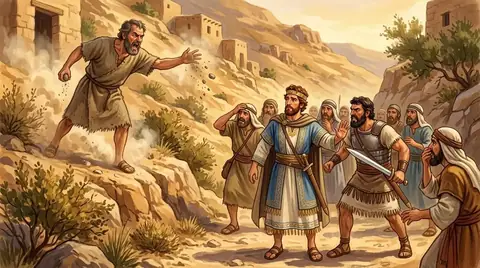
When Absalom's rebellion was over, Shimei, who had cursed and stoned David as he fled, came begging for mercy. Abishai wanted him put to death, but David swore, "Thou shalt not die" (2 Samuel 16:5–13; 2 Samuel 19:16–23). David even offered Amasa, who had led Absalom's army, the command of his own troops to win back Judah's loyalty (2 Samuel 19:13). Such clemency healed the kingdom.
David learned it from God, who is "merciful and gracious, slow to anger, and plenteous in mercy" (Psalms 103:8–10) and does not deal with us after our sins. Jesus taught, "Blessed are the merciful: for they shall obtain mercy" (Matthew 5:7). See Mercy.
Key verses
- 2 Samuel 19:16–23
And Shimei the son of Gera, a Benjamite, which was of Bahurim, hasted and came down with the men of Judah to meet king David. And there were a thousand men of Benjamin with him, and Ziba the servant of the house of Saul, and his fifteen sons and his twenty servants with him; and they went over Jordan before the king. And there went over a ferry boat to carry over the king’s household, and to do what he thought good. And Shimei the son of Gera fell down before the king, as he was come over Jordan; …
- Psalms 103:8–10
The Lord is merciful and gracious, slow to anger, and plenteous in mercy. He will not always chide: neither will he keep his anger for ever. He hath not dealt with us after our sins; nor rewarded us according to our iniquities.
- Matthew 5:7
Blessed are the merciful: for they shall obtain mercy.
Read next
 PersonAbsalomDavid's handsome third son, who murdered his brother Amnon, won the hearts of Israel and rose in rebellion against his…
 PersonShimeiA relative of Saul who cursed David and threw stones at him as the king fled from Absalom. David spared him, but…PersonAmasaDavid's nephew, who led Absalom's army in the rebellion. David forgave him and made him commander in Joab's place, but…TeachingMercyKindness to someone in need or in the wrong, when you could rightly do nothing or punish them. God is "rich in mercy"…
Written for this app in its own words, from the Bible, with the facts checked against Bible dictionaries and encyclopedias: Easton's, Smith's, Fausset's, ISBE, Holman, the New Bible Dictionary, Vine's and the Thompson Chain topics.
