
Custom · Everyday life
The city gate
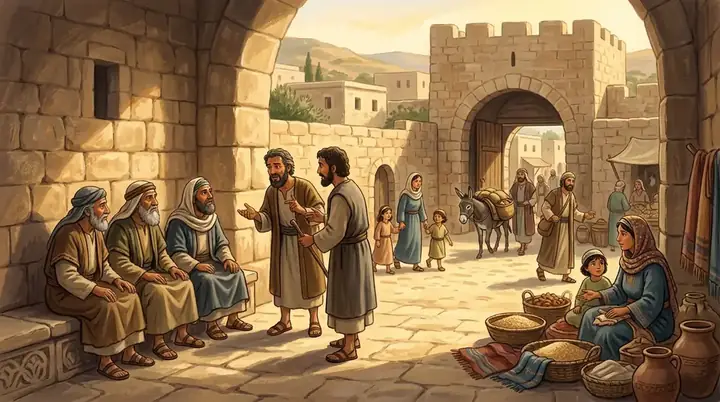
The gateway in a town's wall was its town hall, courthouse and market in one. The elders sat there as judges and witnesses of deals, and whoever held the gate held the city.
- Who sat there
- The elders and judges (Deuteronomy 21:19; Ruth 4:1–2); sometimes the king (2 Samuel 19:8)
- Done there
- Lawsuits, buying and selling land, marriage contracts, markets, news
- Built with
- Rooms in the wall, an upper chamber, double doors with bars (2 Samuel 18:24, 33)
What it was
A walled town had few gates, often only one, and they were shut at night (Joshua 2:5). The gateway was a deep passage through the wall with guard rooms off it, benches of stone along the sides, and often a tower or upper room above. The open ground just inside or outside it was the one wide space in a crowded town, so the gate became the place where everyone met. Watchmen on top could see far off, as the one who spotted the runners bringing news of Absalom (2 Samuel 18:24–27).
Life at the gate
Here the elders sat as a court. A rebellious son was brought "unto the elders of his city, and unto the gate" (Deuteronomy 21:19); disputes over a bride, a widow's rights or a boundary were settled there (Deuteronomy 22:15; Deuteronomy 25:7). Abraham bought his burial field in front of all who came in at the gate of Hebron (Genesis 23:10–18), and Boaz called ten elders together at the gate of Bethlehem to witness his claim to Ruth (Ruth 4:1–11). Prophets preached there, and markets were held there; flour was sold at the gate of Samaria the day the siege ended (2 Kings 7:1). A man known and respected "in the gates" had made it (Proverbs 31:23), and to "turn aside the poor in the gate" was to deny them justice (Amos 5:12). Lot sat in the gate of Sodom (Genesis 19:1), and Absalom stood by the gate of Jerusalem to steal the people's hearts (2 Samuel 15:2–6).
What it means
Because the gate was the strong point, "gates" came to stand for power itself. The LORD loves "the gates of Zion" (Psalms 87:2), and Jesus promised that the gates of hell would not hold out against his church (Matthew 16:18). He died outside the gate, bearing shame, and Hebrews calls us to go out to him there (Hebrews 13:12–13). The gates of the New Jerusalem are never shut (Revelation 21:25).
Key verses
- Deuteronomy 21:19
Then shall his father and his mother lay hold on him, and bring him out unto the elders of his city, and unto the gate of his place;
- Ruth 4:1–2
Then went Boaz up to the gate, and sat him down there: and, behold, the kinsman of whom Boaz spake came by; unto whom he said, Ho, such a one! turn aside, sit down here. And he turned aside, and sat down. And he took ten men of the elders of the city, and said, Sit ye down here. And they sat down.
- 2 Samuel 15:2
And Absalom rose up early, and stood beside the way of the gate: and it was so, that when any man that had a controversy came to the king for judgment, then Absalom called unto him, and said, Of what city art thou? And he said, Thy servant is of one of the tribes of Israel.
- Proverbs 31:23
Her husband is known in the gates, when he sitteth among the elders of the land.
- Amos 5:12
For I know your manifold transgressions and your mighty sins: they afflict the just, they take a bribe, and they turn aside the poor in the gate from their right.
- Hebrews 13:12
Wherefore Jesus also, that he might sanctify the people with his own blood, suffered without the gate.
Read next
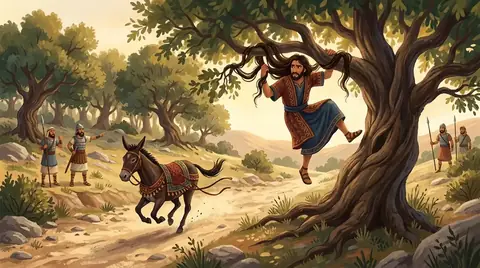 PersonAbsalomDavid's handsome third son, who murdered his brother Amnon, won the hearts of Israel and rose in rebellion against his…
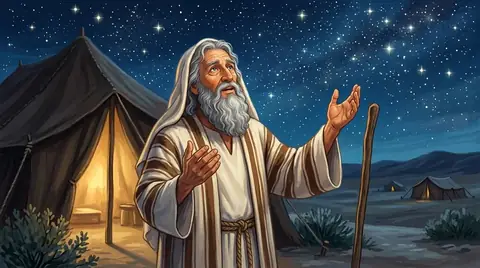 PersonAbrahamThe man God called out of Ur to a land he had never seen, promising him a people and a blessing for the whole world. He…
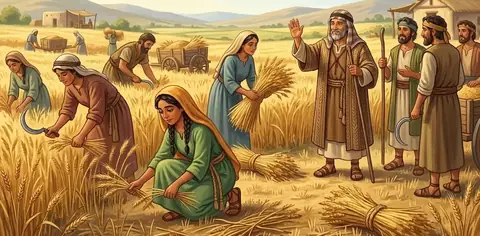 PersonBoazA wealthy farmer of Bethlehem who married Ruth, the Moabite widow, as her kinsman-redeemer. Their great-grandson was…
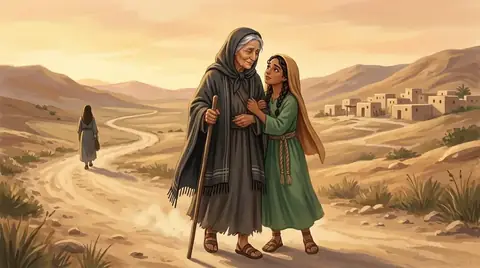 PersonRuthA young widow from Moab who left her own land to stay with her mother-in-law Naomi and trust Israel's God. She married…
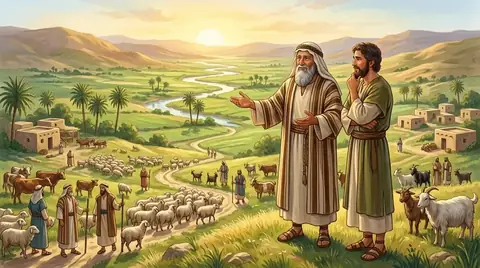 PersonLotAbraham's nephew, who chose the rich plain of Jordan and settled in Sodom. Angels dragged him out before the city…
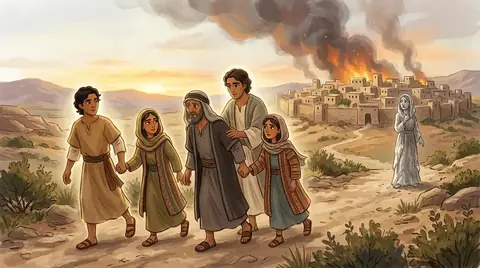 Place · CitySodomThe rich, wicked city by the Dead Sea where Lot settled. Abraham pleaded for it, but ten righteous people were not to…
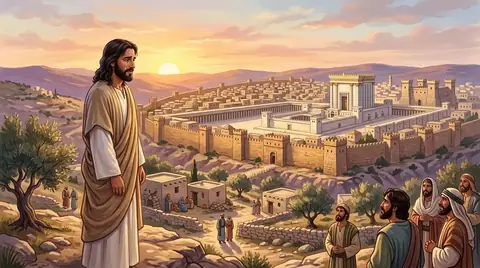 SymbolZion and the new JerusalemZion, the hill of God's temple in Jerusalem, came to mean the whole people among whom God dwells, and at last the…
Written for this app in its own words, from the Bible, with the facts checked against Bible dictionaries and encyclopedias: Easton's, Smith's, Fausset's, ISBE, Holman, the New Bible Dictionary, Vine's and the Thompson Chain topics.
