
Teaching
Church and State
also called Jurisdiction
How God's worship and earthly government relate. In Israel prophets anointed and rebuked kings, and kings ordered the temple; Jesus said to give Caesar his due and God his, and the apostles obeyed God rather than men.
In the Old Testament
Kings and priests each had their own place. The prophet Samuel anointed Saul and later rebuked him, then anointed David in his place (1 Samuel 10:1; 1 Samuel 15:22–28; 1 Samuel 16:13). When Saul offered the sacrifice himself, and when King Uzziah went into the temple to burn incense, they were judged for taking the priests' work (1 Samuel 13:8–14; 2 Chronicles 26:16–21). Good kings like David, Hezekiah and Josiah ordered and reformed the temple worship, while bad kings like Jeroboam and Ahaz corrupted it (1 Chronicles 23; 1 Kings 12:26–33; 2 Kings 16:10–16). Even a heathen king, Cyrus, was moved by God to order the temple rebuilt (Ezra 1:1–4).
In Jesus
Asked about paying tax to Rome, Jesus said, "Render to Caesar the things that are Caesar's, and to God the things that are God's" (Mark 12:17). His kingdom, he told Pilate, "is not of this world" (John 18:36).
For us
Christians are to honour rulers as servants of God for good (Romans 13:1–7). But when the authorities forbade the apostles to preach, they answered, "We ought to obey God rather than men" (Acts 5:29).
Key verses
- 2 Chronicles 26:16–21
But when he was strong, his heart was lifted up to his destruction: for he transgressed against the Lord his God, and went into the temple of the Lord to burn incense upon the altar of incense. And Azariah the priest went in after him, and with him fourscore priests of the Lord, that were valiant men: And they withstood Uzziah the king, and said unto him, It appertaineth not unto thee, Uzziah, to burn incense unto the Lord, but to the priests the sons of Aaron, that are consecrated to burn incense: go out of the sanctuary; for thou hast trespassed; neither shall it be for thine honour from the Lord God. …
- Mark 12:17
And Jesus answering said unto them, Render to Cesar the things that are Cesar’s, and to God the things that are God’s. And they marvelled at him.
- John 18:36
Jesus answered, My kingdom is not of this world: if my kingdom were of this world, then would my servants fight, that I should not be delivered to the Jews: but now is my kingdom not from hence.
- Romans 13:1–7
Let every soul be subject unto the higher powers. For there is no power but of God: the powers that be are ordained of God. Whosoever therefore resisteth the power, resisteth the ordinance of God: and they that resist shall receive to themselves damnation. For rulers are not a terror to good works, but to the evil. Wilt thou then not be afraid of the power? do that which is good, and thou shalt have praise of the same: …
- Acts 5:29
Then Peter and the other apostles answered and said, We ought to obey God rather than men.
Read next
 Person · Prophet and judgeSamuelThe prophet who led Israel from the time of the judges into the time of the kings. Given to God by his mother Hannah…
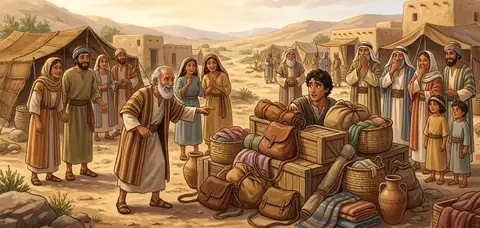 Person · KingSaulIsrael's first king, a tall Benjamite chosen when the people demanded a king like the nations. He began humbly and won…
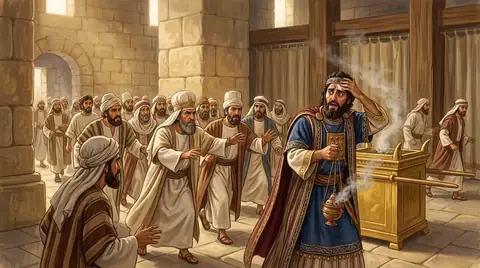 PersonUzziahKing of Judah for fifty-two years, a strong and godly ruler until pride led him into the temple to burn incense. God…
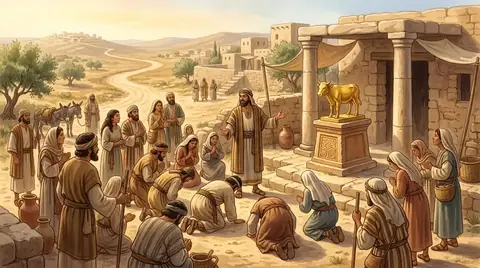 PersonJeroboamSolomon's overseer who became the first king of the breakaway northern kingdom. He set up golden calves at Bethel and…
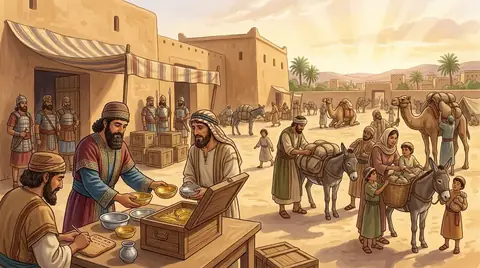 Person · King of PersiaCyrusThe Persian king who conquered Babylon and, in his first year there, let the Jews go home to rebuild the temple. Isaiah…
Written for this app in its own words, from the Bible, with the facts checked against Bible dictionaries and encyclopedias: Easton's, Smith's, Fausset's, ISBE, Holman, the New Bible Dictionary, Vine's and the Thompson Chain topics.
