
Office
Chancellor
Old Testament · about 520 BC · a Persian official in Samaria
A high officer of the Persian empire, literally a master of decrees. Rehum the chancellor wrote to the king to have the rebuilding of Jerusalem stopped.
- Held by
- Rehum, with Shimshai the scribe (Ezra 4:8)
- Meaning
- Lord of judgment, or master of decrees
- Known for
- The letter against Jerusalem
When the Jews came back from exile and began to rebuild Jerusalem, the people the Assyrians had settled in Samaria opposed them. Rehum the chancellor and Shimshai the scribe wrote a letter to King Artaxerxes. They warned that if this "rebellious and bad city" got its walls back, it would stop paying taxes, and they urged the king to search the old records (Ezra 4:8–16).
The Aramaic title means something like "master of decrees". Rehum seems to have been the king's chief officer in the province, with power to give orders in his name. The king wrote back to "Rehum the chancellor" and the rest, telling them to stop the work, and they made the Jews cease "by force and power" (Ezra 4:17–23). Later, God stirred up the prophets Haggai and Zechariah, and the building went on (Ezra 5:1–2).
Key verses
- Ezra 4:8–9
Rehum the chancellor and Shimshai the scribe wrote a letter against Jerusalem to Artaxerxes the king in this sort: Then wrote Rehum the chancellor, and Shimshai the scribe, and the rest of their companions; the Dinaites, the Apharsathchites, the Tarpelites, the Apharsites, the Archevites, the Babylonians, the Susanchites, the Dehavites, and the Elamites,
- Ezra 4:17
Then sent the king an answer unto Rehum the chancellor, and to Shimshai the scribe, and to the rest of their companions that dwell in Samaria, and unto the rest beyond the river, Peace, and at such a time.
- Ezra 4:23
Now when the copy of king Artaxerxes’ letter was read before Rehum, and Shimshai the scribe, and their companions, they went up in haste to Jerusalem unto the Jews, and made them to cease by force and power.
Read next
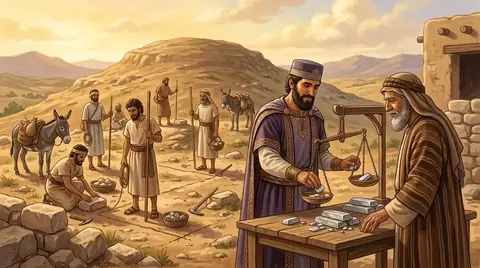 Place · City and regionSamariaThe hill city Omri built as capital of the northern kingdom of Israel. It saw Ahab and Jezebel, Elijah and Elisha…
 PersonArtaxerxesThe Persian king who sent Ezra to Jerusalem with the law in his seventh year and let his cupbearer Nehemiah go and…
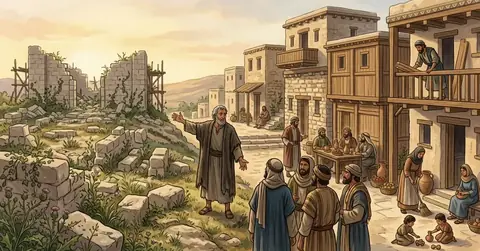 PersonHaggaiThe prophet who, in 520 BC, roused the Jews back from exile to finish rebuilding the temple they had neglected for…
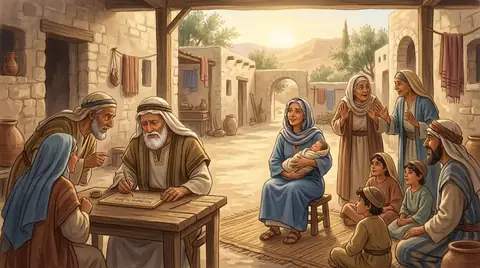 PersonZechariahThe prophet who, with Haggai, urged the returned exiles to rebuild the temple, and whose book foretells the humble King…
Written for this app in its own words, from the Bible, with the facts checked against Bible dictionaries and encyclopedias: Easton's, Smith's, Fausset's, ISBE, Holman, the New Bible Dictionary, Vine's and the Thompson Chain topics.
