
Teaching
Brotherly Kindness
Greek philadelphia, love of the brothers
Warm, family love among Christians, who are brothers and sisters in God's household. Peter lists it among the graces to add to faith; Paul and Hebrews urge it; John says loving the brethren shows we have passed from death to life.
- Where
- Romans 12:10; 1 Thessalonians 4:9; Hebrews 13:1; 1 Peter 1:22; 2 Peter 1:7
- Compare
- Love, Fellowship, Hospitality
What it is
The Greek word is philadelphia, the love of brothers and sisters for one another. Those who belong to Christ have one Father and are one family, and they are to treat each other so. Peter tells believers to add to faith virtue, knowledge, self-control, patience and godliness, "and to godliness brotherly kindness; and to brotherly kindness charity" (2 Peter 1:5–7).
In the New Testament
"Be kindly affectioned one to another with brotherly love; in honour preferring one another" (Romans 12:10). Paul told the Thessalonians they hardly needed teaching about it, "for ye yourselves are taught of God to love one another", but urged them to grow in it more and more (1 Thessalonians 4:9–10). "Let brotherly love continue", says Hebrews, and goes straight on to welcoming strangers and remembering prisoners (Hebrews 13:1–3). Peter asks for love "with a pure heart fervently" (1 Peter 1:22).
For us
Jesus said all would know his disciples by their love for one another (John 13:35). "We know that we have passed from death unto life, because we love the brethren" (1 John 3:14).
Key verses
- 2 Peter 1:7
And to godliness brotherly kindness; and to brotherly kindness charity.
- Romans 12:10
Be kindly affectioned one to another with brotherly love; in honour preferring one another;
- Hebrews 13:1
Let brotherly love continue.
- John 13:35
By this shall all men know that ye are my disciples, if ye have love one to another.
- 1 John 3:14
We know that we have passed from death unto life, because we love the brethren. He that loveth not his brother abideth in death.
Read next
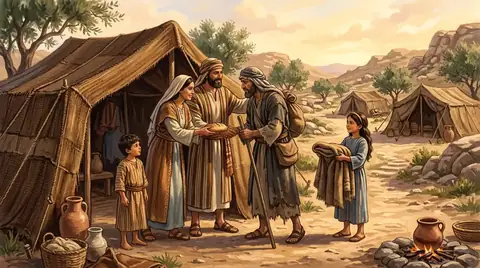 TeachingLove (charity)The greatest of the Christian graces. God is love; he loved the world and gave his Son; and his people are to love him…TeachingFellowshipSharing life together: with God, with Christ, and with other believers. The first church gave itself to the apostles'…
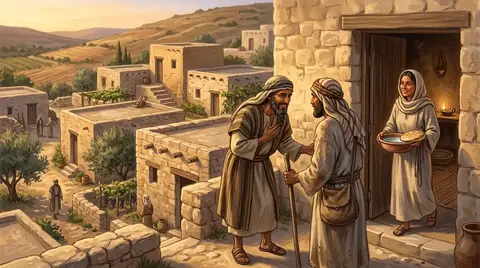 CustomHospitalityWelcoming the traveller and the stranger into your home. In the Bible's world there were few inns, so every household…
Written for this app in its own words, from the Bible, with the facts checked against Bible dictionaries and encyclopedias: Easton's, Smith's, Fausset's, ISBE, Holman, the New Bible Dictionary, Vine's and the Thompson Chain topics.
