
Plant · Feasts
Bitter herbs
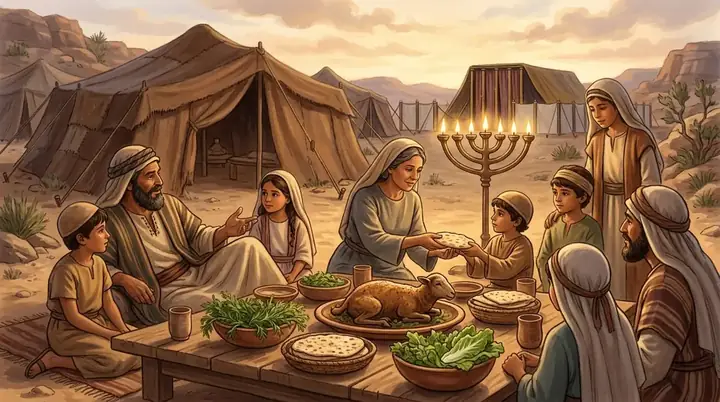
Sharp-tasting green plants, such as wild lettuce and endive, eaten with the Passover lamb to remember the bitterness of slavery in Egypt.
- Eaten at
- The Passover meal, with the roast lamb and unleavened bread (Exodus 12:8)
- Which plants
- The Bible doesn't name them; wild lettuce, endive, chicory and other sharp greens of the spring
What they were
On the night Israel left Egypt, each household was to eat the roast lamb "with unleavened bread and with bitter herbs" (Exodus 12:8), and the rule stood for every Passover after (Numbers 9:11). The Bible does not say which plants; the greens that grow wild in Palestine in spring, such as wild lettuce, endive and chicory, are the likeliest.
What they meant
The sharp taste called to mind the sharpness of slavery. The Egyptians had made Israel's lives bitter with hard labour (Exodus 1:14), and the herbs kept that memory alive at the table, year after year, so that the children would ask and be told. Jewish families still eat bitter herbs at the Passover meal today, and Jesus would have eaten them at the Last Supper.
Key verses
- Exodus 1:14
And they made their lives bitter with hard bondage, in morter, and in brick, and in all manner of service in the field: all their service, wherein they made them serve, was with rigour.
- Exodus 12:8
And they shall eat the flesh in that night, roast with fire, and unleavened bread; and with bitter herbs they shall eat it.
- Numbers 9:11
The fourteenth day of the second month at even they shall keep it, and eat it with unleavened bread and bitter herbs.
Read next
Written for this app in its own words, from the Bible, with the facts checked against Bible dictionaries and encyclopedias: Easton's, Smith's, Fausset's, ISBE, Holman, the New Bible Dictionary, Vine's and the Thompson Chain topics.
