
Topic
Arson
Setting fire to another's property on purpose. The law of Moses made anyone who started a fire that burned a neighbour's crops pay it back, and the Bible tells of fields, cities and even God's sanctuary set alight.
- The law
- Exodus 22:6
- Examples
- Samson (Judges 15:4–5); Absalom (2 Samuel 14:30); Zimri (1 Kings 16:18); enemies of God's house (Psalms 74:7–8)
- Also called
- Incendiarism
The law
In a dry land fire spread fast. If a man lit a fire and it caught in thorns and burned his neighbour's stacked or standing grain, "he that kindled the fire shall surely make restitution" (Exodus 22:6). Carelessness was no excuse; the loss had to be made good.
In the story
Samson tied foxes tail to tail with torches between them and sent them into the Philistines' grain, vineyards and olive groves (Judges 15:4–5). Absalom, wanting Joab to come to him, had his servants set Joab's barley field on fire (2 Samuel 14:30). Zimri, king for seven days, burned the palace over himself when the city fell (1 Kings 16:18). The psalmist grieved that enemies had "cast fire into thy sanctuary" (Psalms 74:7).
Key verses
- Exodus 22:6
If fire break out, and catch in thorns, so that the stacks of corn, or the standing corn, or the field, be consumed therewith; he that kindled the fire shall surely make restitution.
- Judges 15:4–5
And Samson went and caught three hundred foxes, and took firebrands, and turned tail to tail, and put a firebrand in the midst between two tails. And when he had set the brands on fire, he let them go into the standing corn of the Philistines, and burnt up both the shocks, and also the standing corn, with the vineyards and olives.
- 2 Samuel 14:30
Therefore he said unto his servants, See, Joab’s field is near mine, and he hath barley there; go and set it on fire. And Absalom’s servants set the field on fire.
- Psalms 74:7
They have cast fire into thy sanctuary, they have defiled by casting down the dwelling place of thy name to the ground.
Read next
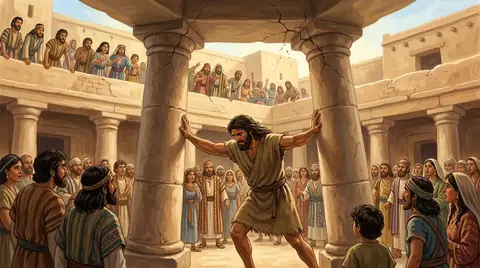 Person · JudgeSamsonThe judge of Israel with superhuman strength from God, a Nazirite from birth. He fought the Philistines single-handed…NationThe PhilistinesA warlike people from over the sea, settled in five cities on the coastal plain to the south-west of Israel. With iron…
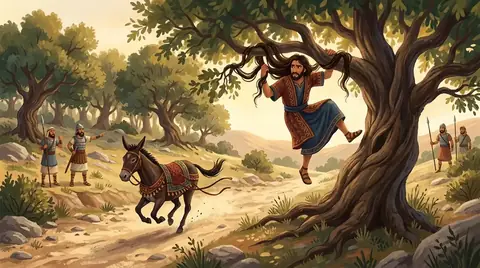 PersonAbsalomDavid's handsome third son, who murdered his brother Amnon, won the hearts of Israel and rose in rebellion against his…PersonJoabDavid's nephew, who commanded his army for forty years: brave, loyal to the throne, and ruthless. He murdered Abner and…PersonZimriAn army officer who killed King Elah of Israel and took the throne, but reigned only seven days. When the army made…
Written for this app in its own words, from the Bible, with the facts checked against Bible dictionaries and encyclopedias: Easton's, Smith's, Fausset's, ISBE, Holman, the New Bible Dictionary, Vine's and the Thompson Chain topics.
