
Thing · Building
Arch
A curved opening over a space in a wall or gate. In the King James Bible the word appears only in Ezekiel's vision of the temple, where it probably means the porches or colonnades of the gateways.
- Where
- Ezekiel 40:16; Ezekiel 40:21–22; Ezekiel 40:26; Ezekiel 40:29
- Compare
- Temple, Gate
What it was
In Ezekiel's vision of the new temple an angel measures the gates, with their guard rooms, narrow windows, palm-tree carvings and "arches" (Ezekiel 40:16; Ezekiel 40:21–22). The Hebrew word is uncertain; it most likely means the porches or vestibules of the gateways rather than curved arches as we know them.
True arches were known in the ancient world, in Egypt and Mesopotamia, but the Bible says little about them in Israel's buildings, which mostly used beams of wood or stone laid across the gaps. In Jerusalem, the base of a great arch from the time of Herod's temple can still be seen, where a stairway or bridge once led up to the temple courts from the valley below.
Key verses
- Ezekiel 40:16
And there were narrow windows to the little chambers, and to their posts within the gate round about, and likewise to the arches: and windows were round about inward: and upon each post were palm trees.
- Ezekiel 40:21–22
And the little chambers thereof were three on this side and three on that side; and the posts thereof and the arches thereof were after the measure of the first gate: the length thereof was fifty cubits, and the breadth five and twenty cubits. And their windows, and their arches, and their palm trees, were after the measure of the gate that looketh toward the east; and they went up unto it by seven steps; and the arches thereof were before them.
- Ezekiel 40:29
And the little chambers thereof, and the posts thereof, and the arches thereof, according to these measures: and there were windows in it and in the arches thereof round about: it was fifty cubits long, and five and twenty cubits broad.
Read next
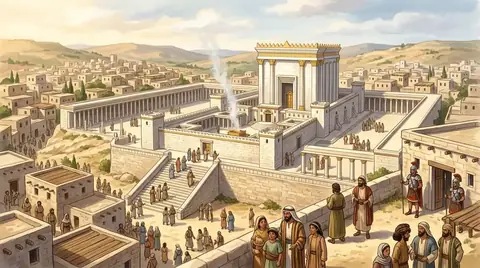 Thing · WorshipThe TempleGod's house in Jerusalem, where he was worshipped and the sacrifices offered. Solomon built it, Babylon burned it, the…
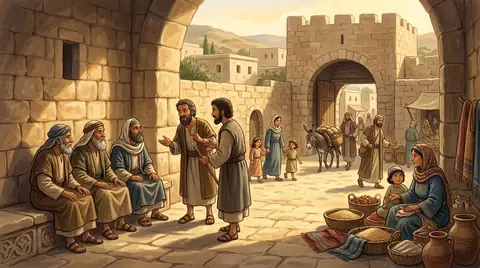 Custom · Everyday lifeThe city gateThe gateway in a town's wall was its town hall, courthouse and market in one. The elders sat there as judges and…
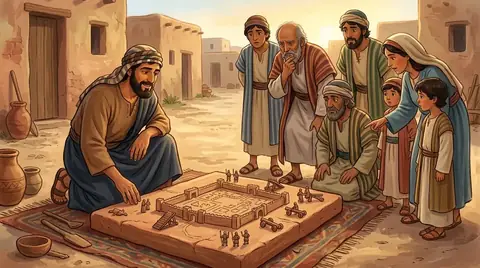 PersonEzekielA priest and prophet taken to Babylon with the exiles from Judah. By the river Chebar he saw visions of God's glory and…
 Person · KingHerodThe name of a family of rulers under Rome. Herod the Great tried to kill the infant Jesus; his son Antipas beheaded…
Written for this app in its own words, from the Bible, with the facts checked against Bible dictionaries and encyclopedias: Easton's, Smith's, Fausset's, ISBE, Holman, the New Bible Dictionary, Vine's and the Thompson Chain topics.
