
Plant · Tree
Algum
AL-gumAlso spelled almug · a precious wood imported by Solomon
A fine imported timber, also called almug, brought to Solomon from Ophir by Hiram's ships. He used it for steps in the temple and for harps and lyres.
- Also called
- Almug (1 Kings 10:11–12)
- Used for
- Steps or railings in the temple and palace, harps and lyres
- From
- Ophir, by sea, with gold and precious stones; also asked of Lebanon
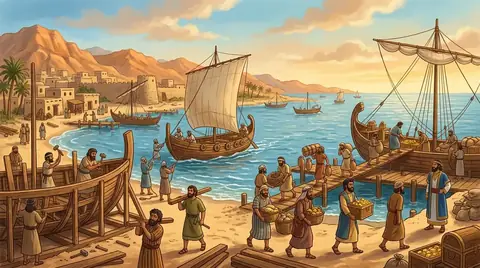
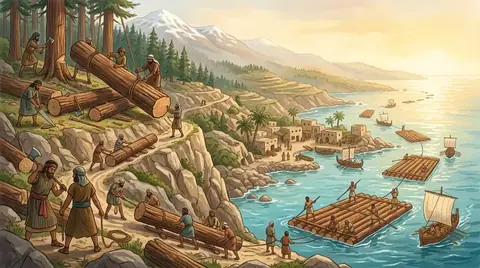
The books of Kings call it almug, Chronicles algum; both are the same wood. Hiram's ships brought a great quantity of it from Ophir along with gold, and Solomon made from it steps or supports for the temple and the palace, and harps and lyres for the singers. The writer adds that so much of this wood had never been seen in Israel before or since (1 Kings 10:11–12; 2 Chronicles 9:10–11). Solomon had also asked Hiram for algum logs from Lebanon with the cedar and cypress (2 Chronicles 2:8).
What tree it was isn't certain. The most common guess is red sandalwood from India, a dark, heavy, sweet-smelling wood that takes a high polish and suits fine instruments; if Ophir lay on the trade route to India, that would fit.
Key verses
- 1 Kings 10:11–12
And the navy also of Hiram, that brought gold from Ophir, brought in from Ophir great plenty of almug trees, and precious stones. And the king made of the almug trees pillars for the house of the Lord, and for the king’s house, harps also and psalteries for singers: there came no such almug trees, nor were seen unto this day.
- 2 Chronicles 2:8
Send me also cedar trees, fir trees, and algum trees, out of Lebanon: for I know that thy servants can skill to cut timber in Lebanon; and, behold, my servants shall be with thy servants,
- 2 Chronicles 9:10–11
And the servants also of Huram, and the servants of Solomon, which brought gold from Ophir, brought algum trees and precious stones. And the king made of the algum trees terraces to the house of the Lord, and to the king’s palace, and harps and psalteries for singers: and there were none such seen before in the land of Judah.
Read next
 Place · RegionOphirA far-off land famous for its fine gold, reached by Solomon's ships from the Red Sea. Its name became a byword for the…
 Place · MountainsLebanonThe snow-capped mountain range north of Israel, famous for its cedars. Its timber built the temple, and its forests and…Person · KingHiramThe king of Tyre who was a friend to David and Solomon, sending cedar from Lebanon and skilled workmen for David's…
 Person · KingSolomonDavid's son and Israel's third king, who asked God for wisdom and received riches and fame as well. He built the temple…
Written for this app in its own words, from the Bible, with the facts checked against Bible dictionaries and encyclopedias: Easton's, Smith's, Fausset's, ISBE, Holman, the New Bible Dictionary, Vine's and the Thompson Chain topics.
