
Plant
Wormwood
Hebrew laanah · a bitter desert shrub
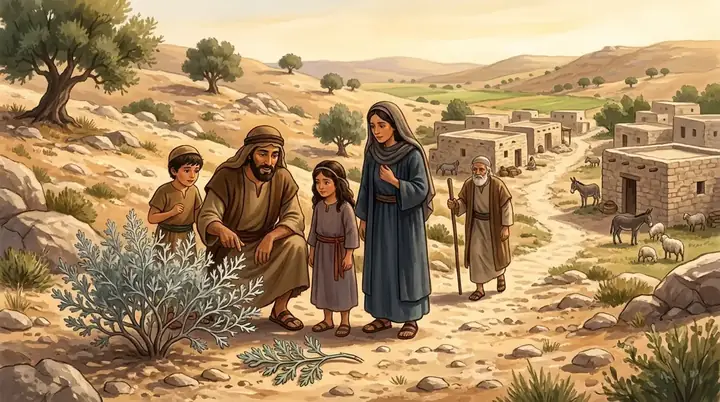
A grey shrub with a strong, bitter taste, growing in dry places. The Bible uses it for bitterness of every kind: the end of sin, the judgment of God, and grief.
- Where
- Deuteronomy 29:18; Proverbs 5:4; Jeremiah 23:15; Lamentations 3:15,19; Amos 5:7; Revelation 8:11
- Stands for
- Bitterness, affliction, poisoned justice, the fruit of idolatry
The plant
Several kinds of wormwood grow in the deserts of Israel and Sinai: low, silvery-grey bushes whose leaves are so bitter that a sprig in the mouth cannot be forgotten. The Hebrew word is almost always used as a picture, since everyone knew the taste.
In the Old Testament
Moses warns of "a root that beareth gall and wormwood": a person who turns to idols while telling himself he is safe (Deuteronomy 29:18). The forbidden woman is sweet as honey at first, but her end "is bitter as wormwood" (Proverbs 5:4). Twice God says through Jeremiah that he will feed his faithless people with wormwood and give them bitter water to drink (Jeremiah 9:15; Jeremiah 23:15), and the prophet of Lamentations says it has happened: God has filled him with bitterness and made him drunk with wormwood (Lamentations 3:15, 19). Amos accuses the courts of turning judgment into wormwood, justice gone bitter and poisonous (Amos 5:7; Amos 6:12).
In Revelation
When the third trumpet sounds, a great star falls from heaven, named Wormwood, and a third of the rivers and springs turn bitter so that many die (Revelation 8:10–11). The bitterness that people chose becomes the bitterness they must drink. See Wormwood and gall.
Key verses
- Deuteronomy 29:18
Lest there should be among you man, or woman, or family, or tribe, whose heart turneth away this day from the Lord our God, to go and serve the gods of these nations; lest there should be among you a root that beareth gall and wormwood;
- Proverbs 5:4
But her end is bitter as wormwood, sharp as a twoedged sword.
- Jeremiah 9:15
Therefore thus saith the Lord of hosts, the God of Israel; Behold, I will feed them, even this people, with wormwood, and give them water of gall to drink.
- Lamentations 3:19
Remembering mine affliction and my misery, the wormwood and the gall.
- Revelation 8:11
And the name of the star is called Wormwood: and the third part of the waters became wormwood; and many men died of the waters, because they were made bitter.
Written for this app in its own words, from the Bible, with the facts checked against Bible dictionaries and encyclopedias: Easton's, Smith's, Fausset's, ISBE, Holman, the New Bible Dictionary, Vine's and the Thompson Chain topics.
