
Place · Region
Trachonitis
trak-o-NYE-tisNew Testament · east of the Jordan, south of Damascus · today the Lejah, in Syria
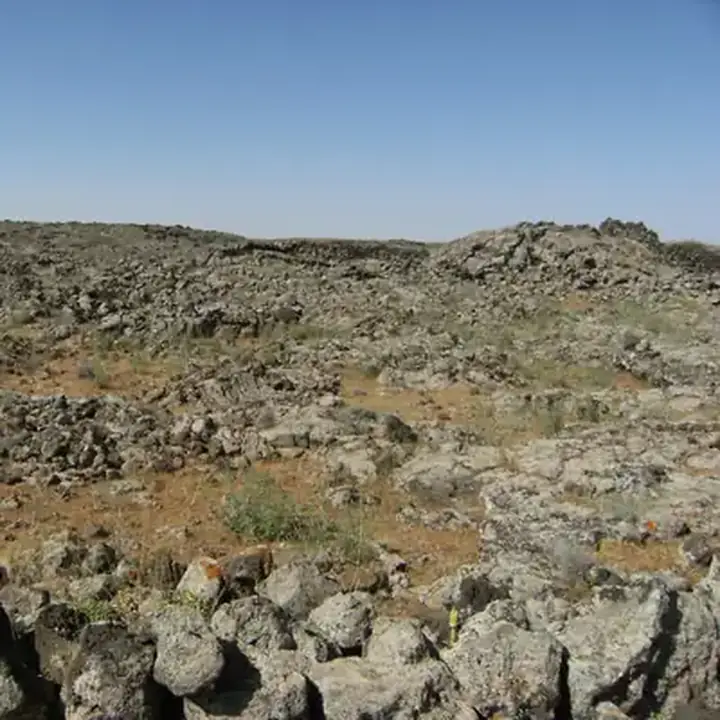
A wild, rocky region east of the Jordan, ruled by Philip the tetrarch when John the Baptist began to preach. Its name comes from the Greek for "rough" or "stony".
- Where
- South of Damascus, east of the Jordan; today the Lejah (Lajat) in southern Syria
- Ruled by
- Philip the tetrarch, son of Herod the Great (Luke 3:1)
- Meaning
- A rough, stony place
Where
Trachonitis was a broad plateau of old black lava, cracked into ridges and full of caves, lying south of Damascus and east of the Sea of Galilee. It is still a hard country, known today as the Lejah. Its caves long made it a hiding place for robbers, and Herod the Great had to work hard to bring it under control.
In the Bible
Luke fixes the date when John the Baptist began to preach by naming the rulers of the day. In the fifteenth year of the emperor Tiberius, with Pontius Pilate governing Judea and Herod Antipas over Galilee, "his brother Philip" was "tetrarch of Ituraea and of the region of Trachonitis" (Luke 3:1). So the gospel story is set firmly in real history. Some link the region with the Old Testament district of Argob in Bashan.
Later
After Philip died, the region was joined for a time to the province of Syria and then given to Herod Agrippa I.
Key verses
- Luke 3:1–2
Now in the fifteenth year of the reign of Tiberius Cesar, Pontius Pilate being governor of Judea, and Herod being tetrarch of Galilee, and his brother Philip tetrarch of Iturea and of the region of Trachonitis, and Lysanias the tetrarch of Abilene, Annas and Caiaphas being the high priests, the word of God came unto John the son of Zacharias in the wilderness.
On the map
Mentioned in 1 verse
- Luke 1
Read next
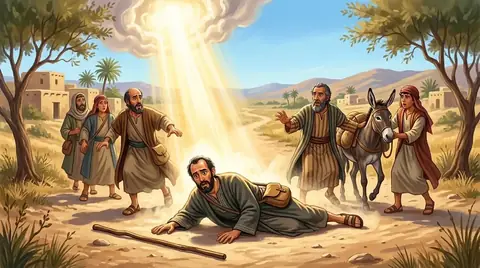 Place · CityDamascusThe ancient capital of Syria, 130 miles north of Jerusalem, for centuries Israel's rival and enemy. On the road to…
 PersonPhilipOne of the twelve apostles, from Bethsaida, who brought Nathanael to Jesus. Another Philip, one of the seven, preached…
 Person · KingHerodThe name of a family of rulers under Rome. Herod the Great tried to kill the infant Jesus; his son Antipas beheaded…
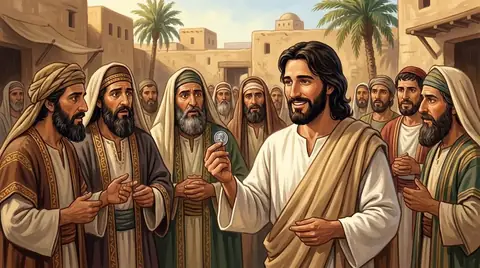 PersonTiberiusThe Roman emperor while John the Baptist preached and Jesus taught, died and rose again. In the Gospels he is simply…Place · RegionArgobA district of Bashan, east of the Jordan, with sixty strong walled towns. Israel took it from King Og, and Jair of…
 Place · RegionBashanA rich, high tableland east of the Sea of Galilee, famous for its oaks and fat cattle. Israel took it from the giant…
Written for this app in its own words, from the Bible, with the facts checked against Bible dictionaries and encyclopedias: Easton's, Smith's, Fausset's, ISBE, Holman, the New Bible Dictionary, Vine's and the Thompson Chain topics. People and places: STEPBible.org (TIPNR), CC BY 4.0; where a place is today and its photo: OpenBible.info, CC BY 4.0.
