
Symbol · Plant
Thorns
Sharp, useless growth that came with the curse on the ground, and in Jesus' teaching the cares and riches that choke God's word. Jesus was crowned with thorns; Paul was given a thorn in the flesh.
- The curse
- Thorns and thistles for Adam (Genesis 3:18)
- The crown
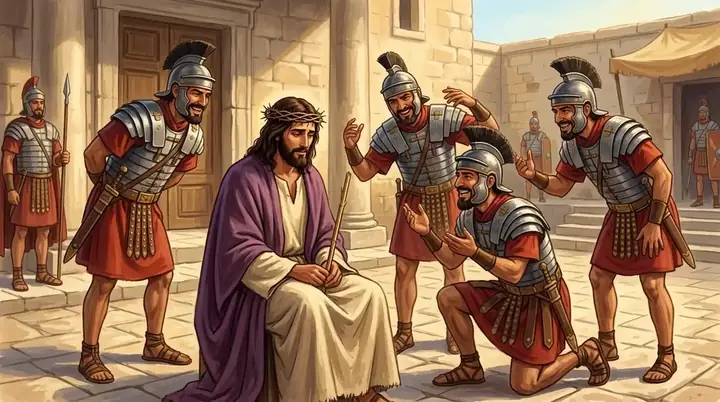
- Plaited by Roman soldiers and pressed on Jesus' head (Matthew 27:29; John 19:2)
- The parable
- Seed among thorns is choked by cares and riches (Matthew 13:7, 22)
- Paul
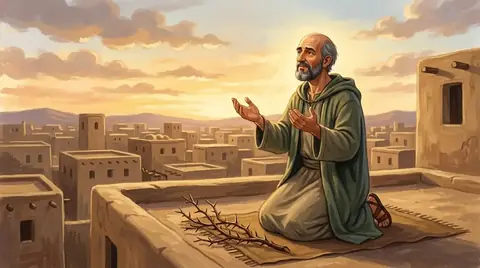
- "A thorn in the flesh" he prayed to be rid of (2 Corinthians 12:7)
In the land
Many thorny plants grow in Israel: thorn bushes used for hedges and for fuel, briers that take over neglected fields, and the spiny jujube and acacia trees of the Jordan valley. Thorns were a daily nuisance that tore skin and clothes and swallowed untended land. A farmer who did not clear them lost his crop. So they stand in the Bible for everything that happens when things are left to go wrong.
What they stand for
Thorns came with the curse. Because of Adam's sin the ground would bring forth "thorns also and thistles", and work would become toil (Genesis 3:18). A vineyard that God abandons grows briers and thorns (Isaiah 5:6); the sluggard's way is hedged with them (Proverbs 15:19). God warned Israel that the Canaanites they failed to drive out would be "thorns in your sides" (Numbers 33:55). In the parable of the sower some seed fell among thorns, which grew up and choked it: the person who hears God's word but lets "the care of this world, and the deceitfulness of riches" crowd it out (Matthew 13:7, 22). Thorn fires burn quickly and loudly and leave nothing, like the laughter of a fool (Ecclesiastes 7:6).
The crown of thorns
Pilate's soldiers twisted a crown of thorns and pressed it on Jesus' head, put a purple robe on him and a reed in his hand, and knelt before him in mockery (Matthew 27:29; John 19:2–5). Christians have always seen more in it than the soldiers meant. The thorns were the sign of the curse on the earth, and the one who was crowned with them was carrying that curse to the cross (Galatians 3:13).
Paul's thorn
Paul was given "a thorn in the flesh" to keep him humble after his visions. He does not say what it was. Three times he asked God to take it away, and the answer was, "My grace is sufficient for thee" (2 Corinthians 12:7–9). See A thorn in the flesh.
Hope
Isaiah promised that where the thorn had been, the fir tree would grow, and the myrtle instead of the brier, as a sign of God's new creation (Isaiah 55:13). The curse that began in a garden ends in one.
Key verses
- Genesis 3:18
Thorns also and thistles shall it bring forth to thee; and thou shalt eat the herb of the field;
- Matthew 13:22
He also that received seed among the thorns is he that heareth the word; and the care of this world, and the deceitfulness of riches, choke the word, and he becometh unfruitful.
- Matthew 27:29
And when they had platted a crown of thorns, they put it upon his head, and a reed in his right hand: and they bowed the knee before him, and mocked him, saying, Hail, King of the Jews!
- 2 Corinthians 12:7
And lest I should be exalted above measure through the abundance of the revelations, there was given to me a thorn in the flesh, the messenger of Satan to buffet me, lest I should be exalted above measure.
- Isaiah 55:13
Instead of the thorn shall come up the fir tree, and instead of the brier shall come up the myrtle tree: and it shall be to the Lord for a name, for an everlasting sign that shall not be cut off.
Read next
Written for this app in its own words, from the Bible, with the facts checked against Bible dictionaries and encyclopedias: Easton's, Smith's, Fausset's, ISBE, Holman, the New Bible Dictionary, Vine's and the Thompson Chain topics.
