
Teaching
Taste
The sense by which we enjoy food, and in the Bible a picture of trying and enjoying God himself: "O taste and see that the LORD is good."
- Lost in old age
- Barzillai, aged eighty (2 Samuel 19:35)
The sense
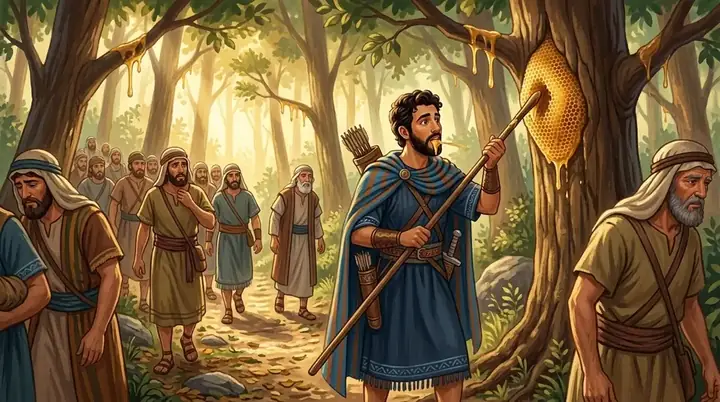
Taste is one of God's gifts. Old Barzillai, at eighty, told David he was too old to go to court, for he could no longer taste what he ate or drank (2 Samuel 19:35). Jonathan tasted a little honey on the end of his staff and his eyes brightened (1 Samuel 14:27–29).
A picture
The Bible uses taste for knowing something by experience. "O taste and see that the LORD is good" (Psalms 34:8). God's words are sweeter than honey to the psalmist (Psalms 119:103). Peter writes to those who "have tasted that the Lord is gracious" (1 Peter 2:3), and Jesus "tasted death for every man", going through it to the full on our behalf (Hebrews 2:9).
Key verses
- 2 Samuel 19:35
I am this day fourscore years old: and can I discern between good and evil? can thy servant taste what I eat or what I drink? can I hear any more the voice of singing men and singing women? wherefore then should thy servant be yet a burden unto my lord the king?
- Psalms 34:8
O taste and see that the Lord is good: blessed is the man that trusteth in him.
- Psalms 119:103
How sweet are thy words unto my taste! yea, sweeter than honey to my mouth!
- Hebrews 2:9
But we see Jesus, who was made a little lower than the angels for the suffering of death, crowned with glory and honour; that he by the grace of God should taste death for every man.
- 1 Peter 2:3
If so be ye have tasted that the Lord is gracious.
Read next
Written for this app in its own words, from the Bible, with the facts checked against Bible dictionaries and encyclopedias: Easton's, Smith's, Fausset's, ISBE, Holman, the New Bible Dictionary, Vine's and the Thompson Chain topics.
