
Thing · Farming
Straw
Dry stalks left after threshing · fodder, bedding and brick-making
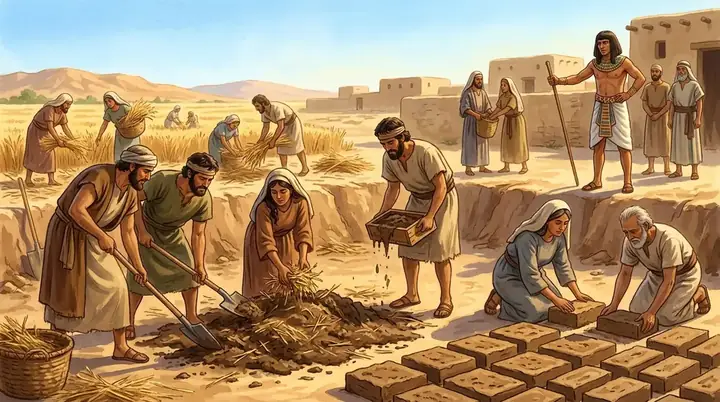
The dry stalks of wheat and barley left after threshing, used in Israel to feed animals and in Egypt, chopped, to bind mud bricks. Pharaoh's refusal to give the Hebrew slaves straw made their labour unbearable.
- Used for
- Feeding and bedding camels, donkeys and oxen; binding mud bricks
- Famous for
- The bricks without straw (Exodus 5)
Straw in the Bible is what was left when the grain had been threshed and the chaff winnowed away: the dry, broken stalks, gathered up for the animals. When Abraham's servant arrived at Laban's house, straw and fodder were brought for his camels before he himself was given water and food (Genesis 24:32). The barley and straw for Solomon's thousands of horses were a regular tax (1 Kings 4:28).
In Egypt chopped straw was mixed into the Nile mud to stop bricks from cracking as they dried. When Moses first asked Pharaoh to let Israel go, Pharaoh punished the people by making them find their own straw while keeping the daily count of bricks the same. The Hebrews were scattered over the fields gathering stubble, and were beaten when they fell short (Exodus 5:6–19). Their anger turned on Moses, and the road to deliverance began at its lowest point.
Straw is also a picture of what is weak or worthless. Leviathan laughs at spears and counts iron as straw (Job 41:27). But in the kingdom of the Messiah, where nothing hurts or destroys, "the lion shall eat straw like the ox" (Isaiah 11:7; Isaiah 65:25).
Key verses
- Exodus 5:7
Ye shall no more give the people straw to make brick, as heretofore: let them go and gather straw for themselves.
- Genesis 24:32
And the man came into the house: and he ungirded his camels, and gave straw and provender for the camels, and water to wash his feet, and the men’s feet that were with him.
- Isaiah 11:7
And the cow and the bear shall feed; their young ones shall lie down together: and the lion shall eat straw like the ox.
Read next
Written for this app in its own words, from the Bible, with the facts checked against Bible dictionaries and encyclopedias: Easton's, Smith's, Fausset's, ISBE, Holman, the New Bible Dictionary, Vine's and the Thompson Chain topics.
