
Teaching
Stammering
Speech that stumbles or is hard to understand. Moses said he was slow of speech, and God answered that he made man's mouth; Isaiah promised that the tongue of the stammerer would speak plainly.
- Moses
- "I am slow of speech, and of a slow tongue" (Exodus 4:10)
- Promise
- "The tongue of the stammerers shall be ready to speak plainly" (Isaiah 32:4)
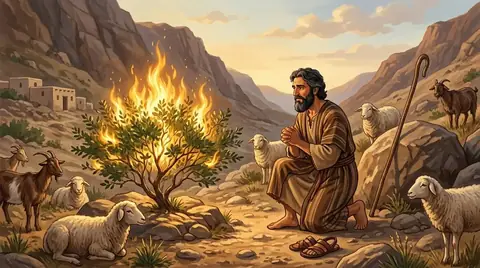
When God sent Moses to Pharaoh, Moses protested that he had never been eloquent: "I am slow of speech, and of a slow tongue." God answered, "Who hath made man's mouth?... Now therefore go, and I will be with thy mouth, and teach thee what thou shalt say" (Exodus 4:10–12). He also gave him Aaron to speak for him.
Isaiah uses stammering in two ways. Judah would not listen to God's clear word, so he would speak to them "with stammering lips and another tongue": the strange speech of foreign invaders (Isaiah 28:11; Isaiah 33:19). But in the coming kingdom of the righteous King, "the tongue of the stammerers shall be ready to speak plainly" (Isaiah 32:1–4). Jesus fulfilled this when he loosed the tongue of a man who was deaf and spoke with difficulty (Mark 7:32–35). God does not need fluent speakers; he uses weak ones and gives them words (1 Corinthians 2:3–4).
Key verses
- Exodus 4:10–12
And Moses said unto the Lord, O my Lord, I am not eloquent, neither heretofore, nor since thou hast spoken unto thy servant: but I am slow of speech, and of a slow tongue. And the Lord said unto him, Who hath made man’s mouth? or who maketh the dumb, or deaf, or the seeing, or the blind? have not I the Lord? Now therefore go, and I will be with thy mouth, and teach thee what thou shalt say.
- Isaiah 32:4
The heart also of the rash shall understand knowledge, and the tongue of the stammerers shall be ready to speak plainly.
- Mark 7:32–35
And they bring unto him one that was deaf, and had an impediment in his speech; and they beseech him to put his hand upon him. And he took him aside from the multitude, and put his fingers into his ears, and he spit, and touched his tongue; And looking up to heaven, he sighed, and saith unto him, Ephphatha, that is, Be opened. …
Read next

Written for this app in its own words, from the Bible, with the facts checked against Bible dictionaries and encyclopedias: Easton's, Smith's, Fausset's, ISBE, Holman, the New Bible Dictionary, Vine's and the Thompson Chain topics.
