
Custom · Daily life
Sitting
In Bible lands people usually sat to work, to teach, to judge and to rest. Jesus sat down to teach, and after his work on the cross he "sat down on the right hand of the Majesty on high."
- To work
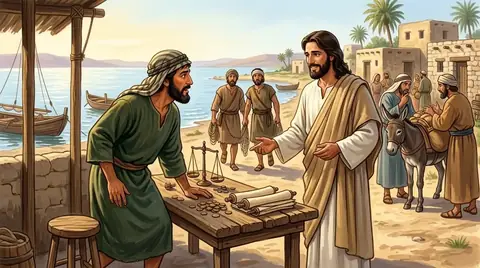
- Matthew "sitting at the receipt of custom" (Matthew 9:9)
- To teach
- Jesus "sat down" to teach (Matthew 5:1; Luke 4:20)
- To judge
- Elders at the city gate (Ruth 4:1–2)
The custom
Most work in the East was done sitting: on the ground, on a mat or on the job itself. Shopkeepers sat at their stalls, and Matthew sat at his tax table when Jesus called him (Matthew 9:9). Judges and elders sat in the city gate to hear cases (Ruth 4:1–2; Proverbs 31:23). Teachers sat while their pupils sat at their feet, as Mary sat at Jesus' feet (Luke 10:39). In the synagogue at Nazareth Jesus stood to read, then closed the book and sat down to preach (Luke 4:16–20). At meals, people reclined.
What it meant
Sitting means work done and authority held. The priests of the temple stood daily, offering the same sacrifices that could never take away sins, "but this man, after he had offered one sacrifice for sins for ever, sat down on the right hand of God" (Hebrews 10:11–12). His work was finished. And he promises the one who overcomes a place to sit with him on his throne (Revelation 3:21).
Key verses
- Matthew 9:9
And as Jesus passed forth from thence, he saw a man, named Matthew, sitting at the receipt of custom: and he saith unto him, Follow me. And he arose, and followed him.
- Luke 4:20
And he closed the book, and he gave it again to the minister, and sat down. And the eyes of all them that were in the synagogue were fastened on him.
- Hebrews 10:11–12
And every priest standeth daily ministering and offering oftentimes the same sacrifices, which can never take away sins: But this man, after he had offered one sacrifice for sins for ever, sat down on the right hand of God;
- Revelation 3:21
To him that overcometh will I grant to sit with me in my throne, even as I also overcame, and am set down with my Father in his throne.
Read next
Written for this app in its own words, from the Bible, with the facts checked against Bible dictionaries and encyclopedias: Easton's, Smith's, Fausset's, ISBE, Holman, the New Bible Dictionary, Vine's and the Thompson Chain topics.
