
Thing · Dress
Shoe
Also "sandal" · see [Shoes and sandals]
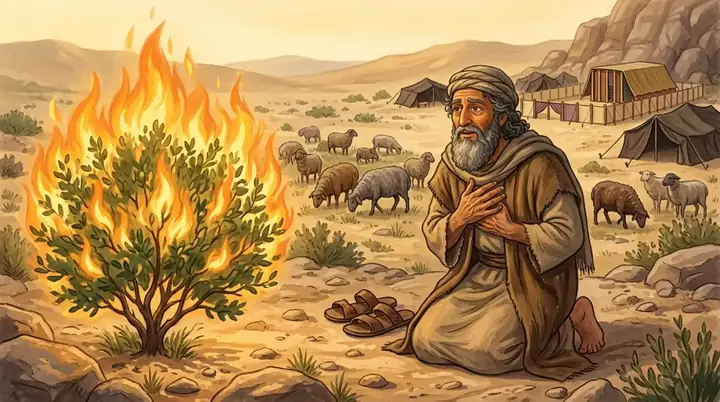
In Bible times a shoe was usually a sandal, a sole of leather or wood tied to the foot with straps. Taking shoes off was a sign of respect or of grief, and a sandal could seal a deal.
- Made of
- Leather or wood, with a thong or strap (Genesis 14:23; Mark 1:7)
- Where
- Exodus 3:5; Deuteronomy 25:9; Deuteronomy 29:5; Ruth 4:7; Ezekiel 24:17; Amos 2:6; Luke 3:16
What it was
Most people wore sandals: a flat sole tied on with a thong that passed between the toes and round the ankle. Abram would not take from the king of Sodom so much as "a shoelatchet" (Genesis 14:23). Soldiers and travellers had sturdier shoes; Ezekiel's bride was given shoes of fine leather (Ezekiel 16:10). God reminded Israel that in forty years of walking the desert their shoes never wore out (Deuteronomy 29:5).
What it meant
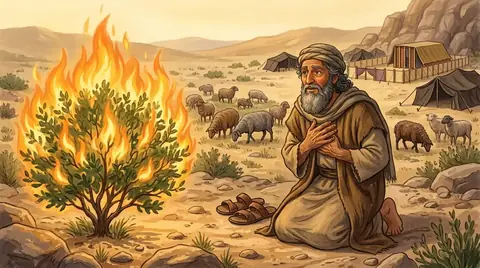
Shoes came off at a holy place, as Moses found at the burning bush (Exodus 3:5), and in deep mourning (Ezekiel 24:17). A man who refused to marry his dead brother's widow had his shoe pulled off in public as a disgrace (Deuteronomy 25:9), and handing over a shoe sealed a sale of land in Boaz's day (Ruth 4:7). To sell a poor man "for a pair of shoes" was to treat him as worth almost nothing (Amos 2:6). Untying someone's sandals was a slave's job, which is why John the Baptist said he was not fit to do it for Christ (Luke 3:16). For the customs in full see Shoes and sandals.
Key verses
- Genesis 14:23
That I will not take from a thread even to a shoelatchet, and that I will not take any thing that is thine, lest thou shouldest say, I have made Abram rich:
- Exodus 3:5
And he said, Draw not nigh hither: put off thy shoes from off thy feet, for the place whereon thou standest is holy ground.
- Deuteronomy 25:9
Then shall his brother’s wife come unto him in the presence of the elders, and loose his shoe from off his foot, and spit in his face, and shall answer and say, So shall it be done unto that man that will not build up his brother’s house.
- Ruth 4:7
Now this was the manner in former time in Israel concerning redeeming and concerning changing, for to confirm all things; a man plucked off his shoe, and gave it to his neighbour: and this was a testimony in Israel.
- Luke 3:16
John answered, saying unto them all, I indeed baptize you with water; but one mightier than I cometh, the latchet of whose shoes I am not worthy to unloose: he shall baptize you with the Holy Ghost and with fire:
Read next
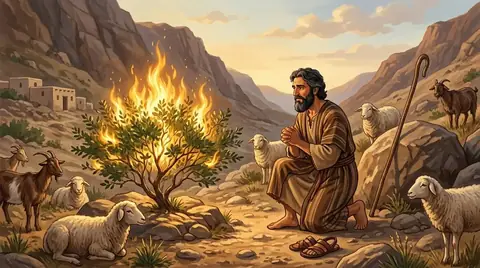 PersonMosesThe man God used to bring Israel out of Egypt, give them his Law at Sinai, and lead them for forty years in the…
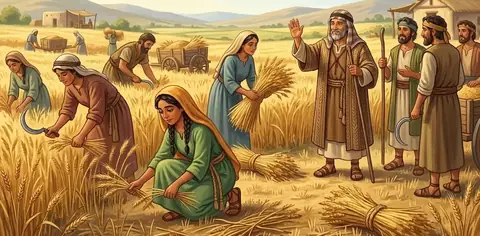 PersonBoazA wealthy farmer of Bethlehem who married Ruth, the Moabite widow, as her kinsman-redeemer. Their great-grandson was…
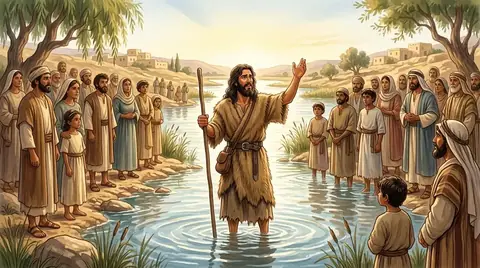 PersonJohn the BaptistThe prophet God sent to prepare the way for Jesus. He called Israel to repent, baptized in the Jordan, pointed to Jesus…
 Custom · Daily lifeShoes and sandalsSandals were taken off on holy ground and in grief, handed over to seal a bargain, and untied by slaves. John the…
Written for this app in its own words, from the Bible, with the facts checked against Bible dictionaries and encyclopedias: Easton's, Smith's, Fausset's, ISBE, Holman, the New Bible Dictionary, Vine's and the Thompson Chain topics.
