
Teaching
Self-condemnation
Passing judgment on yourself, often without knowing it. David condemned the rich man in Nathan's story and found it was himself; the Pharisees condemned themselves by their own words.
- Instances
- Achan (Joshua 7:19–25); David (2 Samuel 12:5–7); Ahab (1 Kings 20:39–42)
- Paul
- "Wherein thou judgest another, thou condemnest thyself" (Romans 2:1)
In the Old Testament
When Nathan told David of a rich man who stole a poor man's only lamb, David burned with anger and said the man deserved to die. Nathan answered, "Thou art the man" (2 Samuel 12:5–7). A prophet in disguise trapped Ahab the same way, so that the king's own verdict fell on himself (1 Kings 20:39–42). Job saw that if he tried to justify himself, his own mouth would condemn him (Job 9:20).
In Jesus
Jesus told the parable of the wicked tenants, and the leaders themselves gave the sentence: those wicked men must be destroyed. They then saw that he had spoken it against them (Matthew 21:40–45). To the servant who hid his talent the master said, "Out of thine own mouth will I judge thee" (Luke 19:22).
For us
Judging others for what we do ourselves condemns us (Romans 2:1). But conscience that condemns can lead to repentance, and "there is therefore now no condemnation to them which are in Christ Jesus" (Romans 8:1; 1 John 3:20).
Key verses
- 2 Samuel 12:5–7
And David’s anger was greatly kindled against the man; and he said to Nathan, As the Lord liveth, the man that hath done this thing shall surely die: And he shall restore the lamb fourfold, because he did this thing, and because he had no pity. And Nathan said to David, Thou art the man. Thus saith the Lord God of Israel, I anointed thee king over Israel, and I delivered thee out of the hand of Saul;
- Matthew 21:40–45
When the lord therefore of the vineyard cometh, what will he do unto those husbandmen? They say unto him, He will miserably destroy those wicked men, and will let out his vineyard unto other husbandmen, which shall render him the fruits in their seasons. Jesus saith unto them, Did ye never read in the scriptures, The stone which the builders rejected, the same is become the head of the corner: this is the Lord’s doing, and it is marvellous in our eyes? …
- Romans 2:1
Therefore thou art inexcusable, O man, whosoever thou art that judgest: for wherein thou judgest another, thou condemnest thyself; for thou that judgest doest the same things.
- Romans 8:1
There is therefore now no condemnation to them which are in Christ Jesus, who walk not after the flesh, but after the Spirit.
Read next
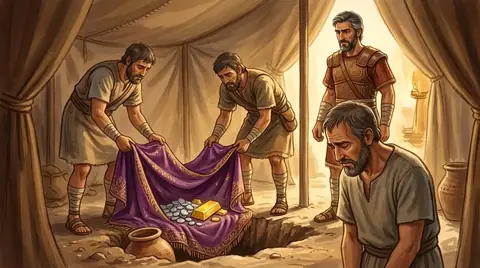 PersonAchanThe man who stole from Jericho's plunder, which God had set apart for himself. His hidden sin caused Israel's defeat at…
 Person · KingDavidThe shepherd boy who killed Goliath and became Israel's greatest king, "a man after God's own heart". He wrote many…
 Person · KingAhabThe seventh king of the northern kingdom of Israel, who married Jezebel and led the nation into Baal worship. He…
 PersonNathanThe prophet who told David that his son, not he, would build the temple, who confronted him over Bathsheba with the…
Written for this app in its own words, from the Bible, with the facts checked against Bible dictionaries and encyclopedias: Easton's, Smith's, Fausset's, ISBE, Holman, the New Bible Dictionary, Vine's and the Thompson Chain topics.
