
Teaching
Security
Chiefly false security
Feeling safe when you are not. The Bible warns against trusting in wealth, pride or delay, as if judgment would never come, and points to God as the only safe refuge.
- False trust
- Riches (Jeremiah 49:4), pride (Obadiah 1:3), a covenant with death (Isaiah 28:15)
- True safety
- "The name of the LORD is a strong tower" (Proverbs 18:10)
The problem
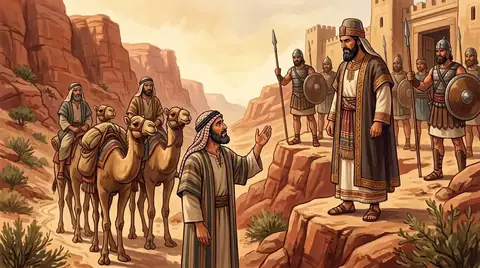
People feel secure because nothing has gone wrong yet. "Because sentence against an evil work is not executed speedily," the heart is set to do evil (Ecclesiastes 8:11). The proud of Edom lived high in the rocks and said, "Who shall bring me down?" (Obadiah 1:3–4). Babylon said, "I shall be a lady for ever" (Isaiah 47:7–9). The leaders of Jerusalem boasted they had a covenant with death; God said hail would sweep away their refuge of lies (Isaiah 28:15–17). Amos cried woe to those "at ease in Zion" who put the evil day far off (Amos 6:1–3).
In Jesus and for us
Jesus told of a rich man who said to his soul, "Take thine ease"; that night his soul was required of him (Luke 12:19–20). The church at Laodicea thought itself rich and did not know it was poor and blind (Revelation 3:17). Real security is not in things or in ourselves but in Christ: no one can pluck his sheep out of his hand (John 10:28).
Key verses
- Ecclesiastes 8:11
Because sentence against an evil work is not executed speedily, therefore the heart of the sons of men is fully set in them to do evil.
- Obadiah 1:3–4
The pride of thine heart hath deceived thee, thou that dwellest in the clefts of the rock, whose habitation is high; that saith in his heart, Who shall bring me down to the ground? Though thou exalt thyself as the eagle, and though thou set thy nest among the stars, thence will I bring thee down, saith the Lord.
- Amos 6:1
Woe to them that are at ease in Zion, and trust in the mountain of Samaria, which are named chief of the nations, to whom the house of Israel came!
- Luke 12:19–20
And I will say to my soul, Soul, thou hast much goods laid up for many years; take thine ease, eat, drink, and be merry. But God said unto him, Thou fool, this night thy soul shall be required of thee: then whose shall those things be, which thou hast provided?
- John 10:28
And I give unto them eternal life; and they shall never perish, neither shall any man pluck them out of my hand.
Read next
Written for this app in its own words, from the Bible, with the facts checked against Bible dictionaries and encyclopedias: Easton's, Smith's, Fausset's, ISBE, Holman, the New Bible Dictionary, Vine's and the Thompson Chain topics.
