
Name · Symbol
Ruhamah
roo-HAH-maOld Testament · the prophet Hosea, about 750 BC · "Ru-hamah" in the KJV
A name meaning "pitied" or "shown mercy". Hosea's daughter had been named Lo-ruhamah, "not pitied", but God promised that Israel would one day be called Ruhamah instead.
- Meaning
- Pitied, shown mercy
- Opposite of
- Lo-ruhamah, "not pitied" (Hosea 1:6)
- Paired with
- Ammi, "my people", the reverse of Lo-ammi
God told Hosea to give his children names that were warnings to unfaithful Israel. His daughter was called Lo-ruhamah, "for I will no more have mercy upon the house of Israel" (Hosea 1:6), and his son Lo-ammi, "not my people" (Hosea 1:9). But right away God promised that the names would be turned around: "Say ye unto your brethren, Ammi; and to your sisters, Ru-hamah" (Hosea 2:1). By dropping the little word "lo", "not", the curse became a blessing.
God says it again at the end of the chapter: "I will have mercy upon her that had not obtained mercy" (Hosea 2:23). Paul and Peter both apply this to the Gentiles and to all who come to Christ: "which in time past were not a people, but are now the people of God: which had not obtained mercy, but now have obtained mercy" (1 Peter 2:10; Romans 9:25).
Key verses
- Hosea 1:6
And she conceived again, and bare a daughter. And God said unto him, Call her name Lo–ruhamah: for I will no more have mercy upon the house of Israel; but I will utterly take them away.
- Hosea 2:1
Say ye unto your brethren, Ammi; and to your sisters, Ru–hamah.
- Hosea 2:23
And I will sow her unto me in the earth; and I will have mercy upon her that had not obtained mercy; and I will say to them which were not my people, Thou art my people; and they shall say, Thou art my God.
- 1 Peter 2:10
Which in time past were not a people, but are now the people of God: which had not obtained mercy, but now have obtained mercy.
Read next
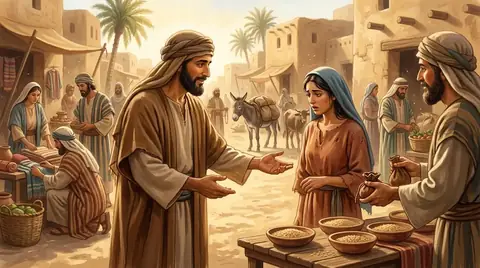 Person · ProphetHoseaThe prophet God sent to Israel, the northern kingdom, in its last years. God told him to marry Gomer, who was…
Written for this app in its own words, from the Bible, with the facts checked against Bible dictionaries and encyclopedias: Easton's, Smith's, Fausset's, ISBE, Holman, the New Bible Dictionary, Vine's and the Thompson Chain topics.
