
Teaching
Religious Intolerance
Hostility to others for their faith. Cain killed Abel, the Jewish leaders persecuted Jesus and his apostles, and even John wanted to stop a man casting out demons in Jesus' name; Jesus said, "Forbid him not".
- Jesus said
- "Forbid him not: for he that is not against us is for us" (Luke 9:50)
- Examples
- Against Stephen (Acts 7:57–59); against Paul (Acts 13:50; Acts 21:28–31)
In the Bible
The first murder had to do with worship: Cain's offering was not accepted and Abel's was, and Cain killed his brother (Genesis 4:4–8; 1 John 3:12). Joshua wanted Moses to stop two men who prophesied in the camp; Moses answered, "would God that all the LORD'S people were prophets" (Numbers 11:26–29). John told Jesus they had stopped a man casting out demons in his name, because he did not follow with them, and Jesus said, "Forbid him not" (Mark 9:38–40; Luke 9:49–50). James and John wanted to call down fire on a Samaritan village that would not receive Jesus, and he rebuked them (Luke 9:52–56).
The religious leaders arrested the apostles and forbade them to speak in Jesus' name (Acts 4:1–3,18), stoned Stephen (Acts 7:57–59), and stirred up crowds against Paul in city after city (Acts 13:50; Acts 17:5).
Israel's law
God's law did command Israel to put down idolatry among themselves (Deuteronomy 13), for they were a holy nation under his direct rule. But Christ's kingdom "is not of this world" (John 18:36); it spreads by persuasion and love, not the sword.
Key verses
- Numbers 11:29
And Moses said unto him, Enviest thou for my sake? would God that all the Lord’s people were prophets, and that the Lord would put his spirit upon them!
- Luke 9:49–56
And John answered and said, Master, we saw one casting out devils in thy name; and we forbad him, because he followeth not with us. And Jesus said unto him, Forbid him not: for he that is not against us is for us. And it came to pass, when the time was come that he should be received up, he stedfastly set his face to go to Jerusalem, …
- Acts 4:18–20
And they called them, and commanded them not to speak at all nor teach in the name of Jesus. But Peter and John answered and said unto them, Whether it be right in the sight of God to hearken unto you more than unto God, judge ye. For we cannot but speak the things which we have seen and heard.
- John 18:36
Jesus answered, My kingdom is not of this world: if my kingdom were of this world, then would my servants fight, that I should not be delivered to the Jews: but now is my kingdom not from hence.
Read next
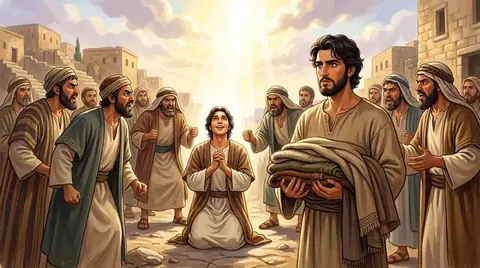 PersonStephenOne of the seven men chosen to care for the widows of the Jerusalem church. Full of faith and the Holy Spirit, he…
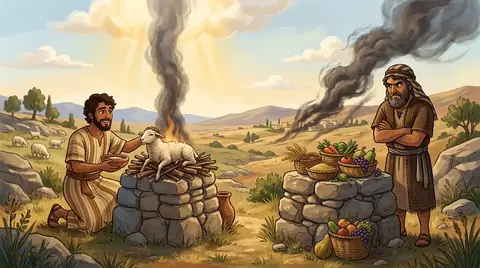 PersonCainThe first child born into the world, and the first murderer. Jealous because God accepted his brother Abel's offering…
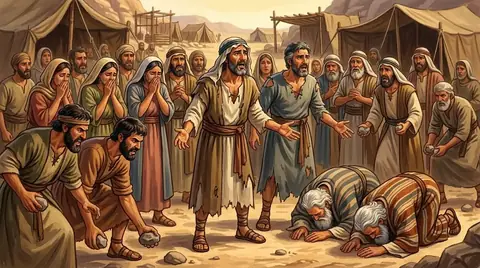 PersonJoshuaMoses' helper who took over from him and led Israel across the Jordan into the Promised Land. He fought the wars of…
Written for this app in its own words, from the Bible, with the facts checked against Bible dictionaries and encyclopedias: Easton's, Smith's, Fausset's, ISBE, Holman, the New Bible Dictionary, Vine's and the Thompson Chain topics.
