
Teaching
Religion
The worship and service of God. The Bible distinguishes false religion, which serves idols or empty rituals, from true religion: loving God and neighbour, caring for orphans and widows, and keeping oneself unstained by the world.
- True religion
- "To visit the fatherless and widows in their affliction, and to keep himself unspotted from the world" (James 1:27)
- Also called
- Piety, godliness
False and true
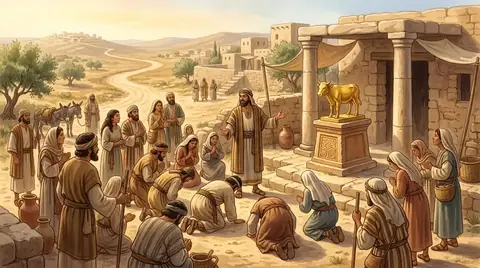
Moses said of the nations' gods, "their rock is not as our Rock" (Deuteronomy 32:31). Jeroboam invented a religion of his own, with golden calves, new priests and a new feast, so that his people would not go to Jerusalem (1 Kings 12:26–33). Even true worship can turn empty: Isaiah heard God say he was weary of Israel's sacrifices while their hands were full of blood (Isaiah 1:11–17). Paul calls himself, before he met Christ, a strict Pharisee of "the straitest sect of our religion" (Acts 26:5), yet he persecuted the church.
Natural religion
God has not left himself without witness anywhere: he gives rain and harvests (Acts 14:17), and the heavens declare his glory (Psalms 19:1). Everyone knows something of his power from what he has made (Romans 1:19–20), and Paul told the Athenians that God is not far from any of us (Acts 17:27–28).
In Jesus
Jesus summed up the law as loving God with all your heart and your neighbour as yourself (Matthew 22:37–40). He taught a righteousness of the heart, not of show (Matthew 5–7). James says religion that does not bridle the tongue is worthless, and pure religion is caring for orphans and widows and staying unspotted by the world (James 1:26–27).
For us
True religion begins with being made new by God and shows itself in a changed life, faith working through love.
Key verses
- Deuteronomy 32:31
For their rock is not as our Rock, even our enemies themselves being judges.
- Isaiah 1:11–17
To what purpose is the multitude of your sacrifices unto me? saith the Lord: I am full of the burnt offerings of rams, and the fat of fed beasts; and I delight not in the blood of bullocks, or of lambs, or of he goats. When ye come to appear before me, who hath required this at your hand, to tread my courts? Bring no more vain oblations; incense is an abomination unto me; the new moons and sabbaths, the calling of assemblies, I cannot away with; it is iniquity, even the solemn meeting. …
- Matthew 22:37–40
Jesus said unto him, Thou shalt love the Lord thy God with all thy heart, and with all thy soul, and with all thy mind. This is the first and great commandment. And the second is like unto it, Thou shalt love thy neighbour as thyself. …
- Acts 17:27
That they should seek the Lord, if haply they might feel after him, and find him, though he be not far from every one of us:
- James 1:26–27
If any man among you seem to be religious, and bridleth not his tongue, but deceiveth his own heart, this man’s religion is vain. Pure religion and undefiled before God and the Father is this, To visit the fatherless and widows in their affliction, and to keep himself unspotted from the world.
Read next
Written for this app in its own words, from the Bible, with the facts checked against Bible dictionaries and encyclopedias: Easton's, Smith's, Fausset's, ISBE, Holman, the New Bible Dictionary, Vine's and the Thompson Chain topics.
