
Thing · Building
Plaster
Lime or clay smeared on walls and stones. A house with spreading mould had to be scraped and replastered; Israel wrote the law on plastered stones; and a hand wrote Belshazzar's doom on the palace plaster.
- Examples
- Mouldy houses (Leviticus 14:42); stones on Mount Ebal (Deuteronomy 27:2–4); Belshazzar's wall (Daniel 5:5)
How it was used
Walls of stone or mud brick were coated with plaster of lime or clay. If a spreading mould or "leprosy" appeared in a house, the priest had the affected stones removed and the inside scraped and plastered again; if it came back, the house was pulled down (Leviticus 14:41–45).
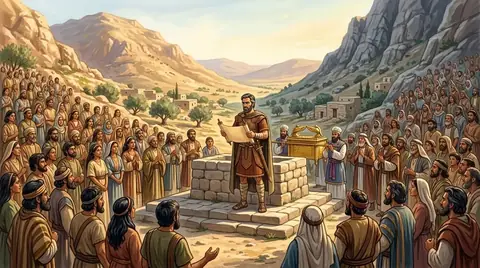
When Israel crossed the Jordan, they were to set up great stones on Mount Ebal, cover them with plaster, and write on them all the words of God's law plainly (Deuteronomy 27:2–8). So the law stood in public for all to read.
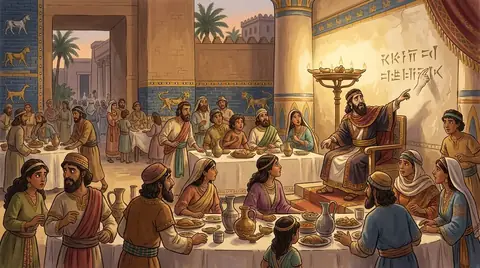
At Belshazzar's feast, the fingers of a hand wrote on the plaster of the palace wall, by the lampstand, where everyone could see (Daniel 5:5). Ezekiel also condemned false prophets who daubed a weak wall with whitewash, covering danger with soothing words (Ezekiel 13:10–15).
Key verses
- Leviticus 14:42
And they shall take other stones, and put them in the place of those stones; and he shall take other morter, and shall plaister the house.
- Deuteronomy 27:2–3
And it shall be on the day when ye shall pass over Jordan unto the land which the Lord thy God giveth thee, that thou shalt set thee up great stones, and plaister them with plaister: And thou shalt write upon them all the words of this law, when thou art passed over, that thou mayest go in unto the land which the Lord thy God giveth thee, a land that floweth with milk and honey; as the Lord God of thy fathers hath promised thee.
- Daniel 5:5
In the same hour came forth fingers of a man’s hand, and wrote over against the candlestick upon the plaister of the wall of the king’s palace: and the king saw the part of the hand that wrote.
Read next
Written for this app in its own words, from the Bible, with the facts checked against Bible dictionaries and encyclopedias: Easton's, Smith's, Fausset's, ISBE, Holman, the New Bible Dictionary, Vine's and the Thompson Chain topics.
